| 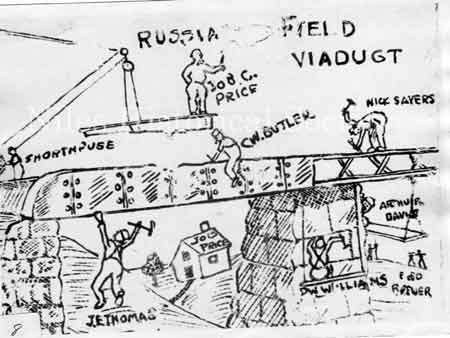
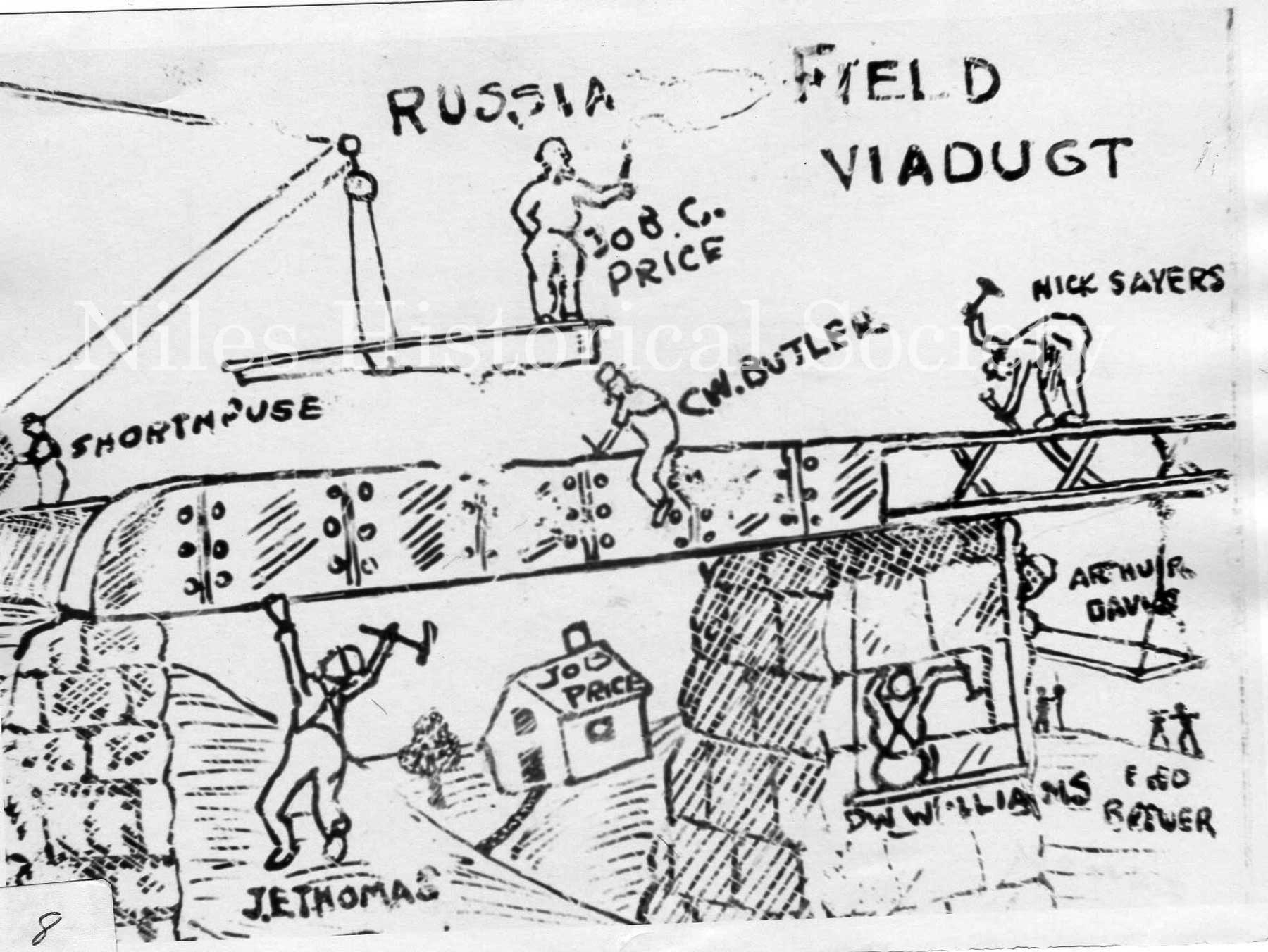
Drawing of the Niles workers building the Russia
Field viaduct |
The
‘Other Viaduct’.
Around Niles the ‘Viaduct’ refers
to the Main Street Bridge crossing the Mahoning River and linking
the South Side to the rest of the City.
However, there is a second viaduct, the bridge
that links Niles and McDonald spanning the Mahoning River. The
viaduct was constructed and finished in 1922 at a cost of $500,000.00.
In Niles it was called the ‘Russia Field’ viaduct
due to the Thomas steel factory in the Belmont Avenue area that
produced high-grade steel called Russian steel.
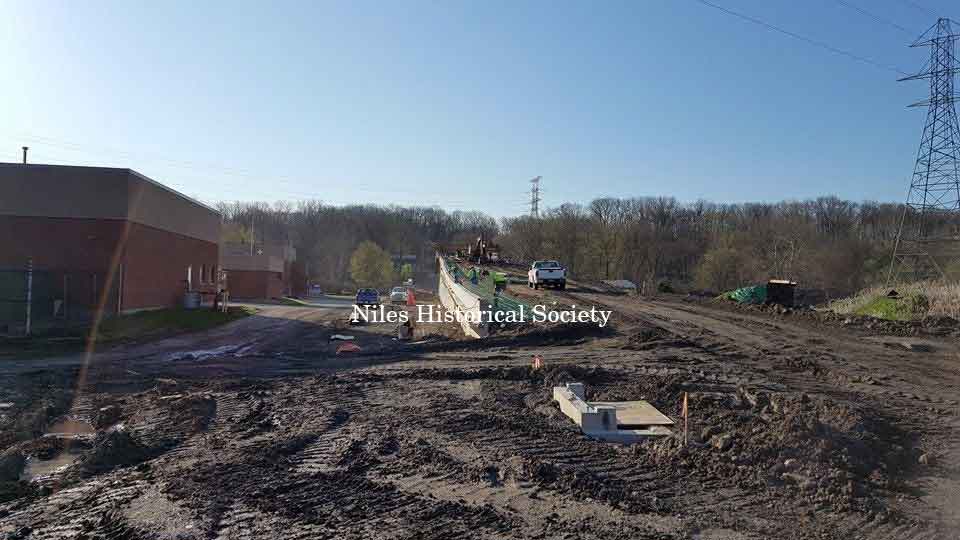
The bridge was considered unsafe in 2011 and
consequently was closed to any type of traffic.
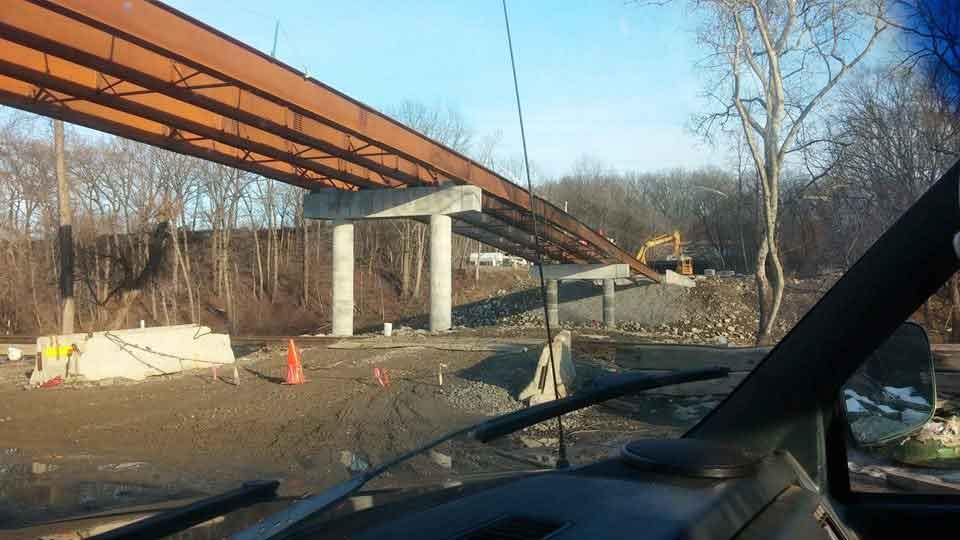
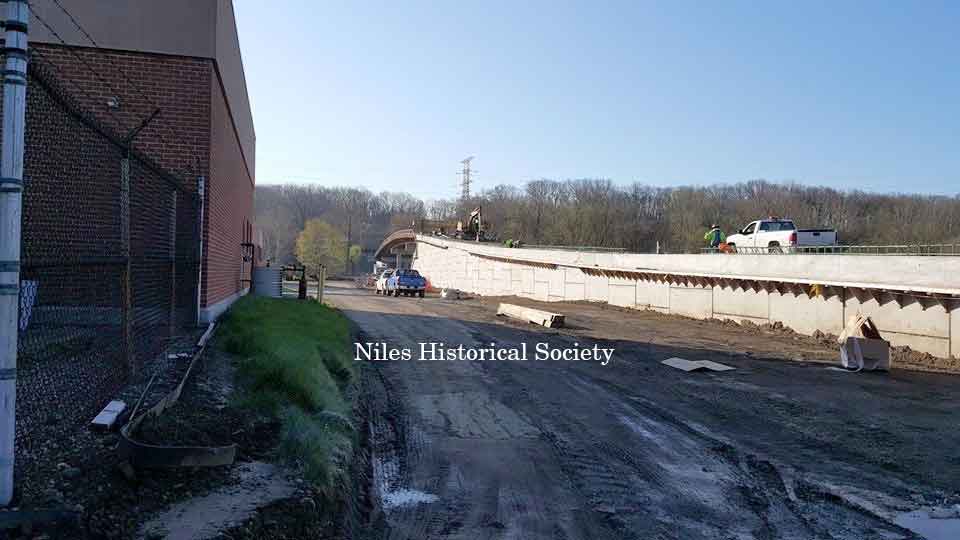
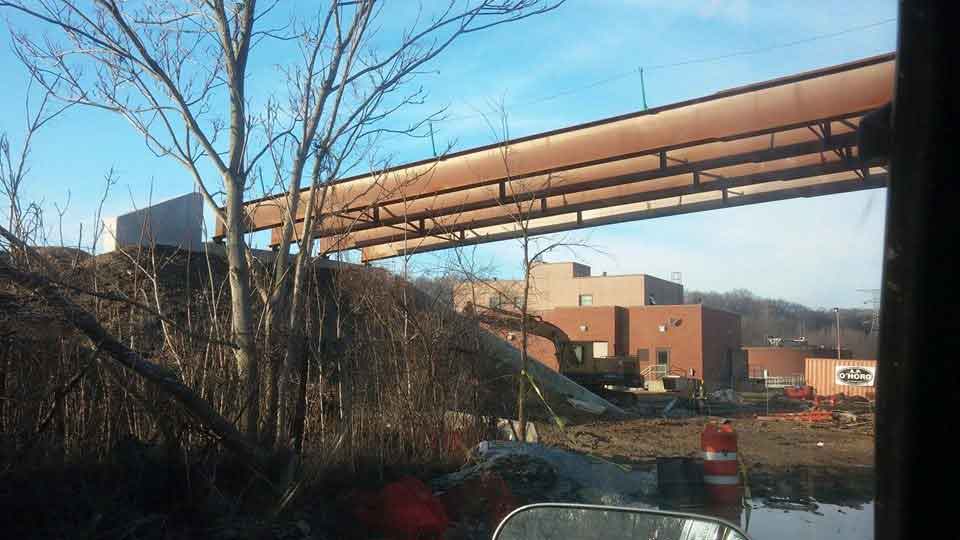
A new bridge was constructed and completed
in 2014-2015.
|
|
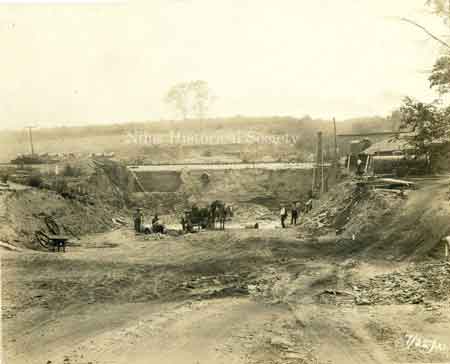
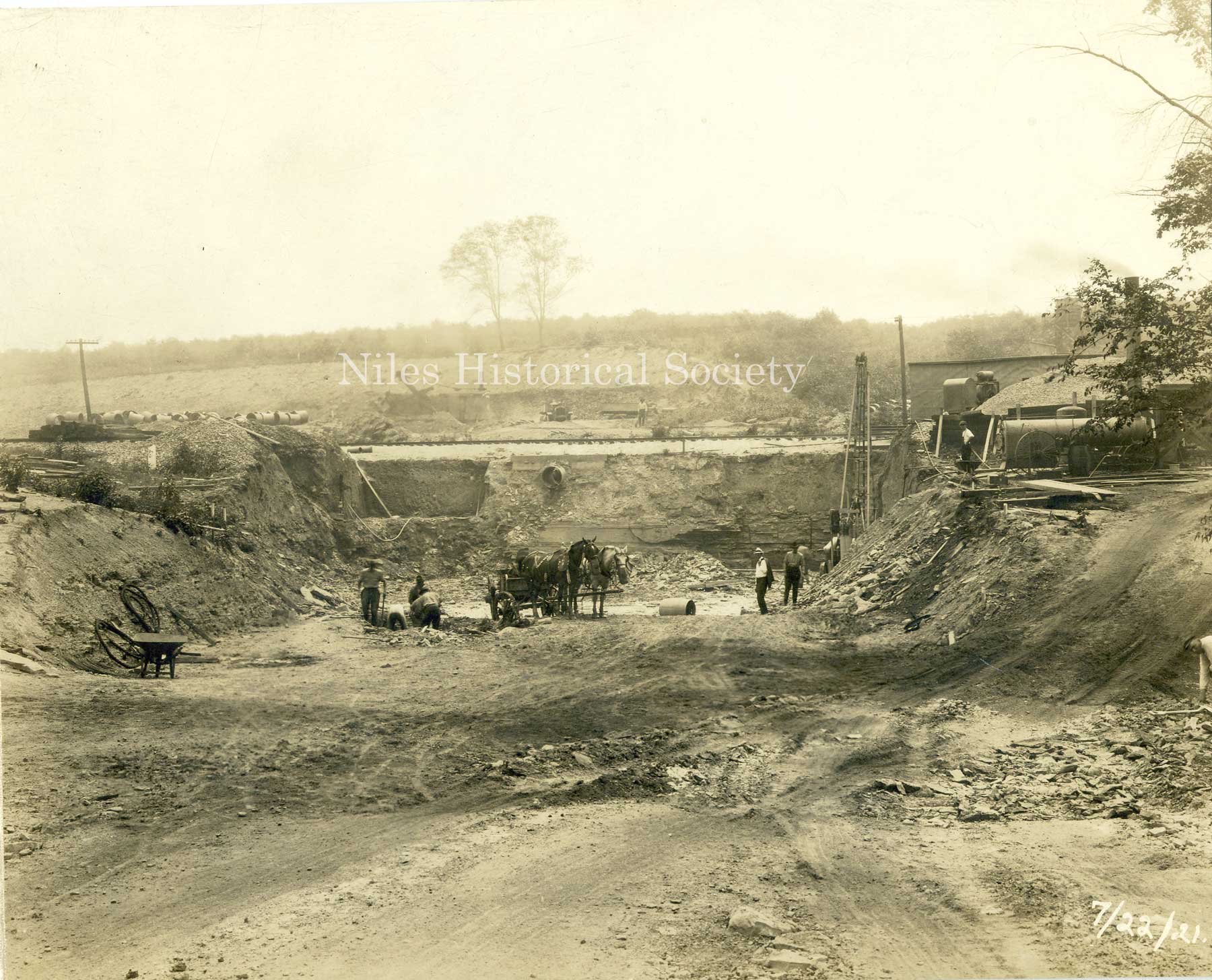
July 22, 1921, working on the
Niles-McDonald Viaduct. Workers are preparing to undercut the
railroad tracks to build the trestle. PO1.90
|
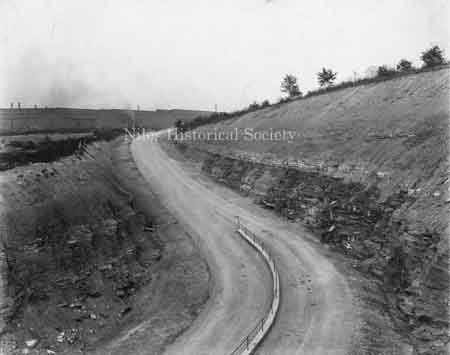
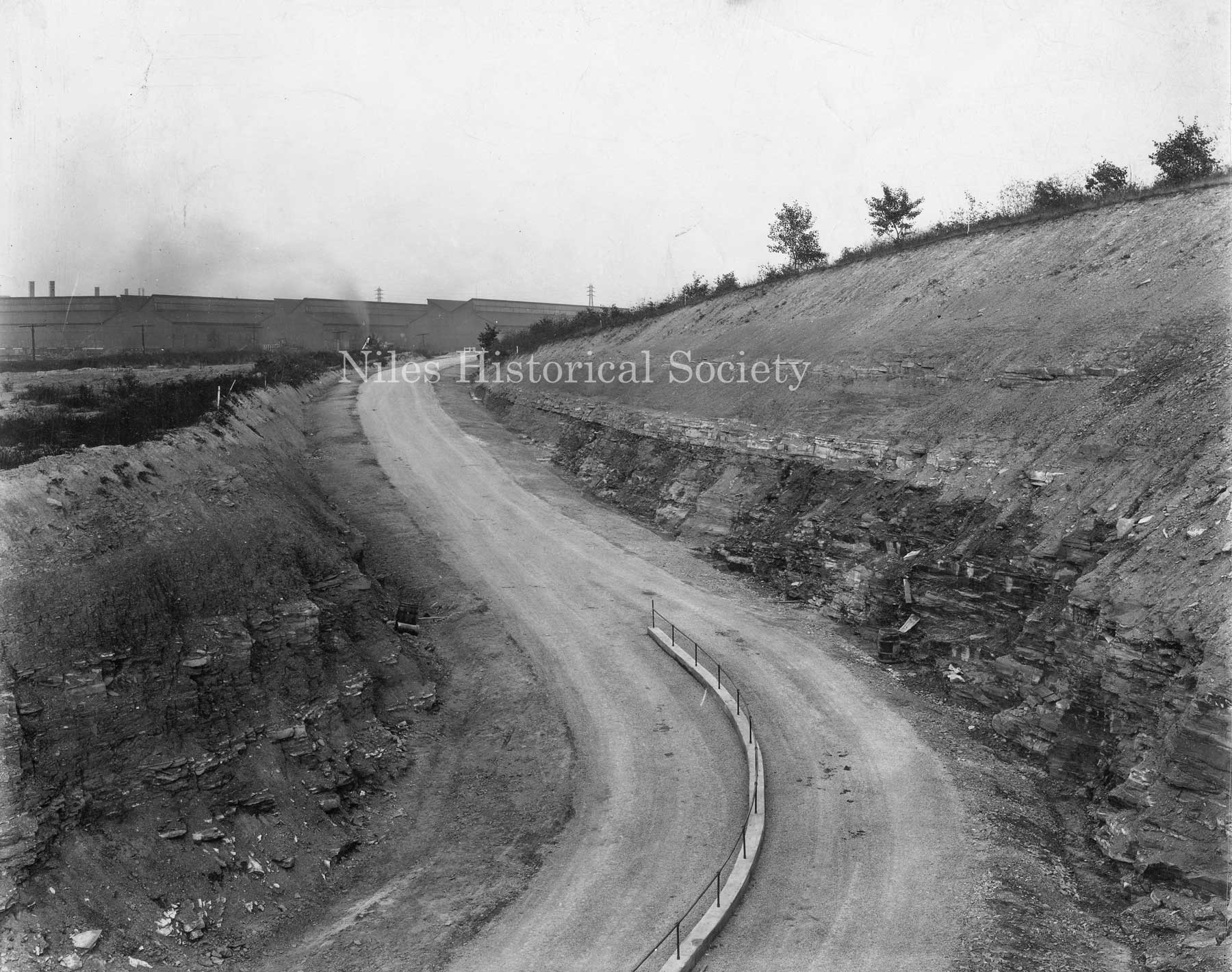
The temporary road from Niles to McDonald while
the viaduct was being built in 1922. PO1.1930
|
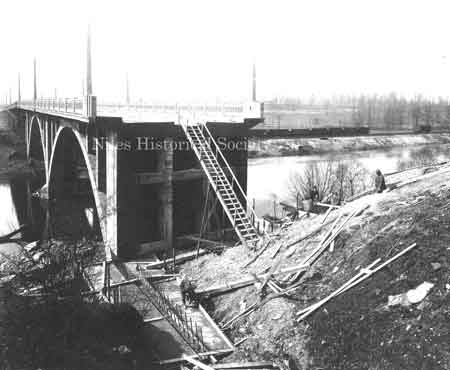
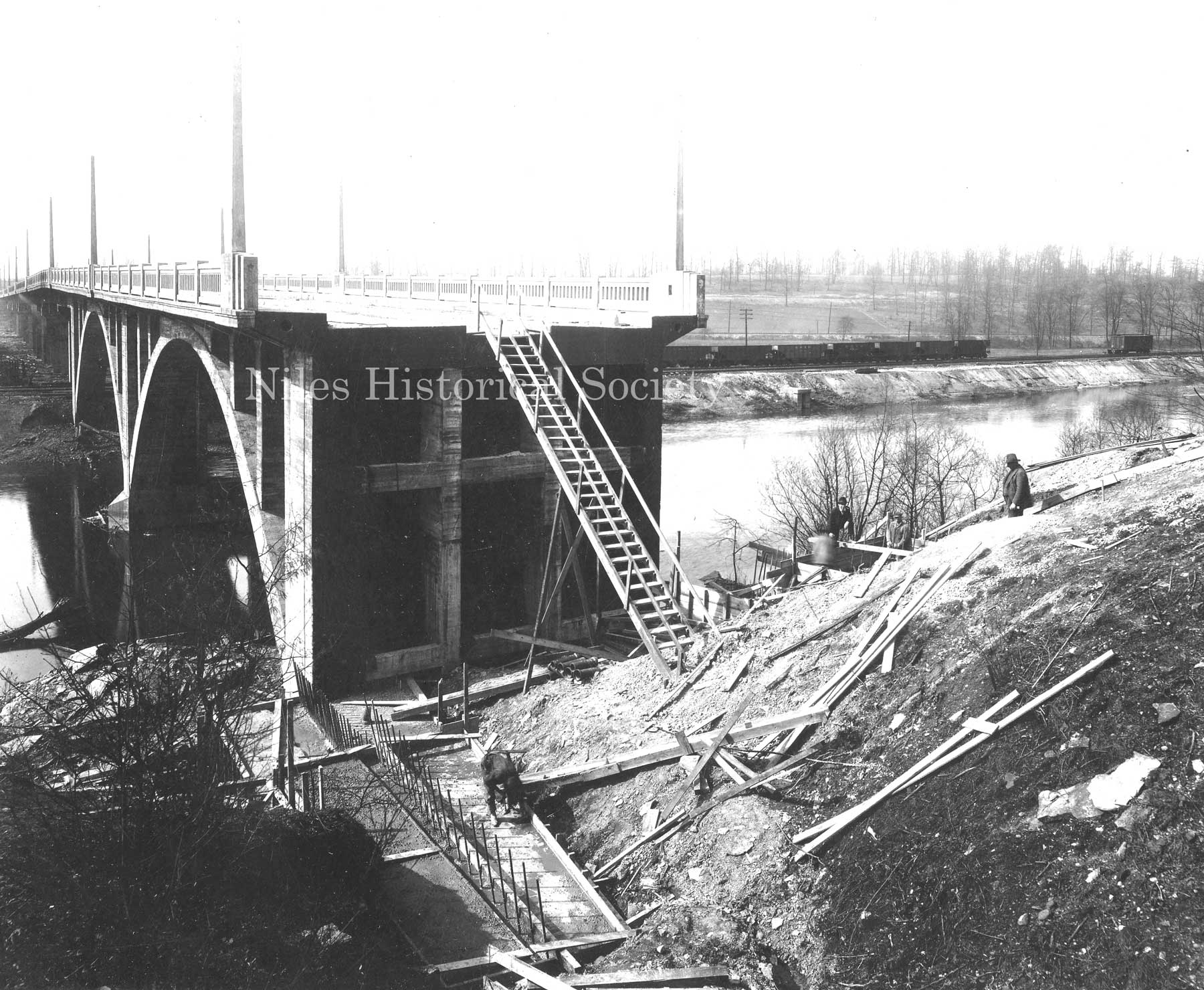
A wooden staircase was used to reach
the unfinished portion of the viaduct. This picture was taken
from the McDonald side of the bridge, looking north. The viaduct
was constructed almost entirely of concrete with very little steel
being used. PO1.91 |
|
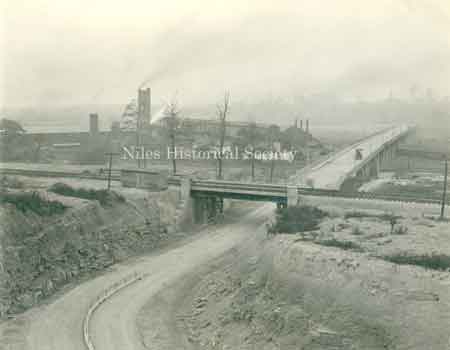
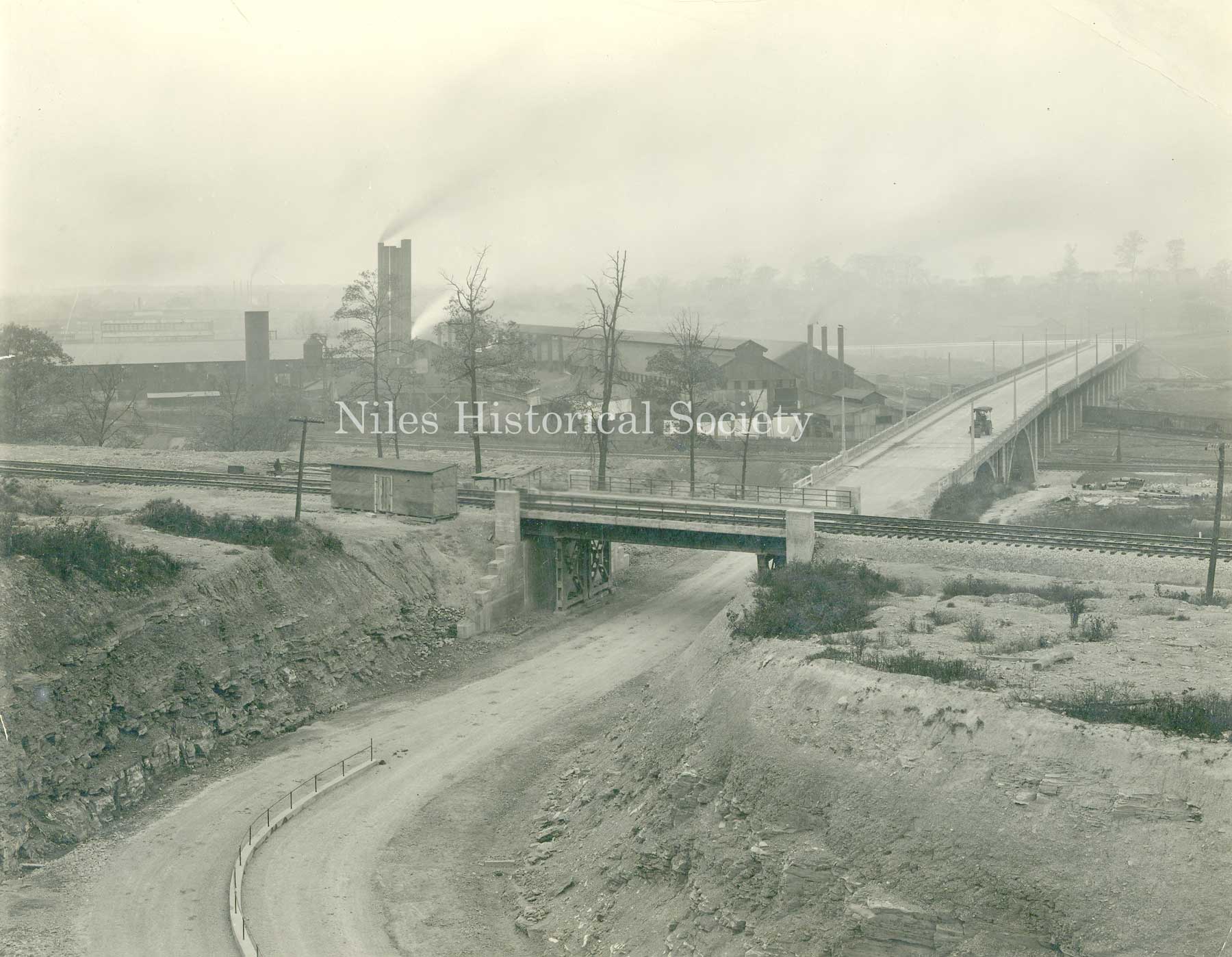
This photo of the final phases of
construction on the Niles-McDonald viaduct was taken in 1922 looking
toward McDonald. Finished in November, the bridge was 950 feet
long with a 940 foot approach on the Niles side and a 1,225 foot
approach on the McDonald side. Total cost was $500,000. with the
Lake Erie Construction Co. of Cleveland the contractor. |

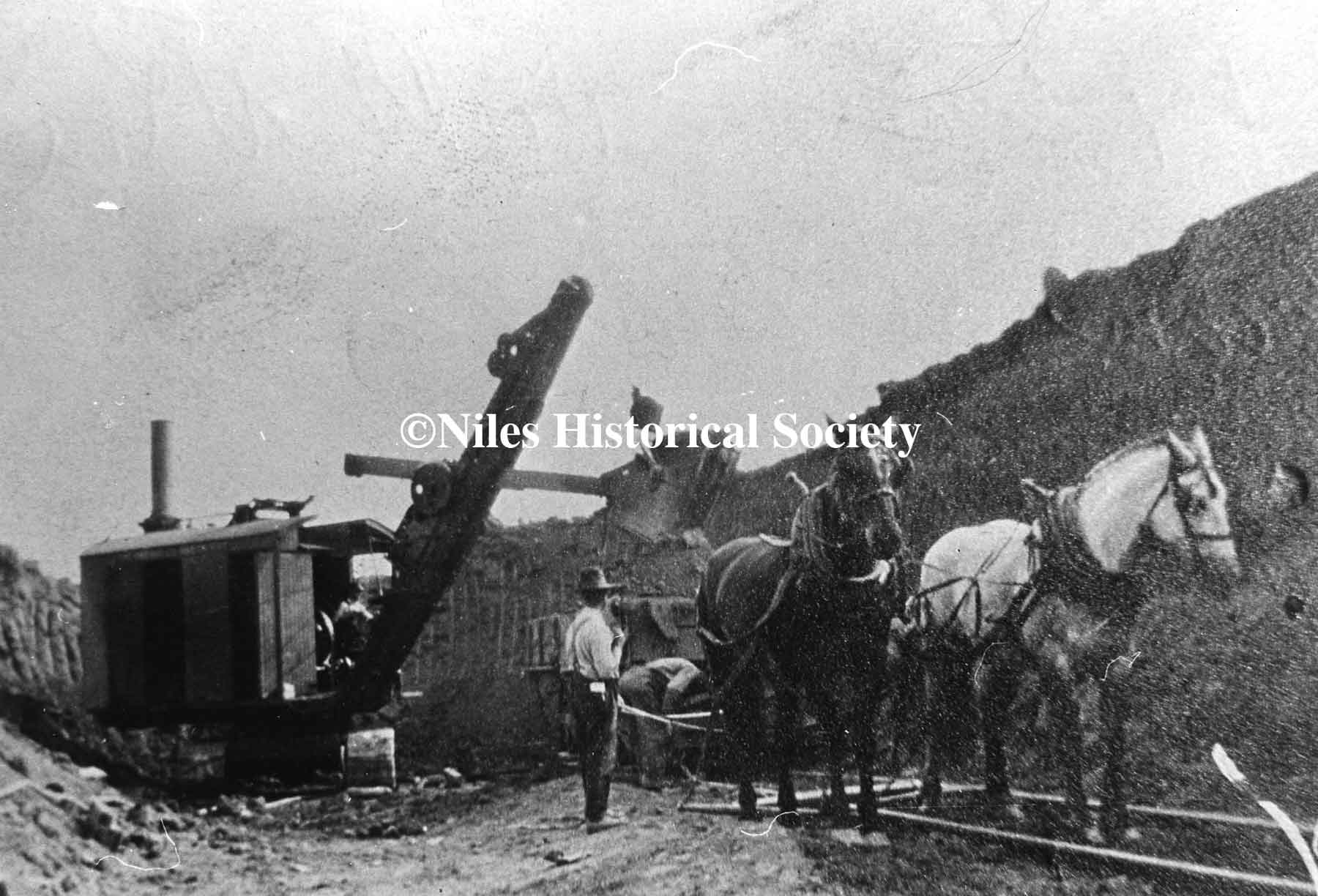
Horse drawn wagon and steam
shovel excavating the underpass.
|
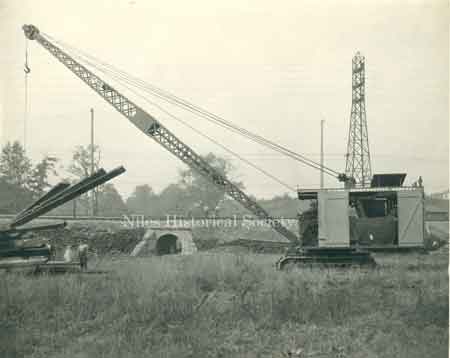
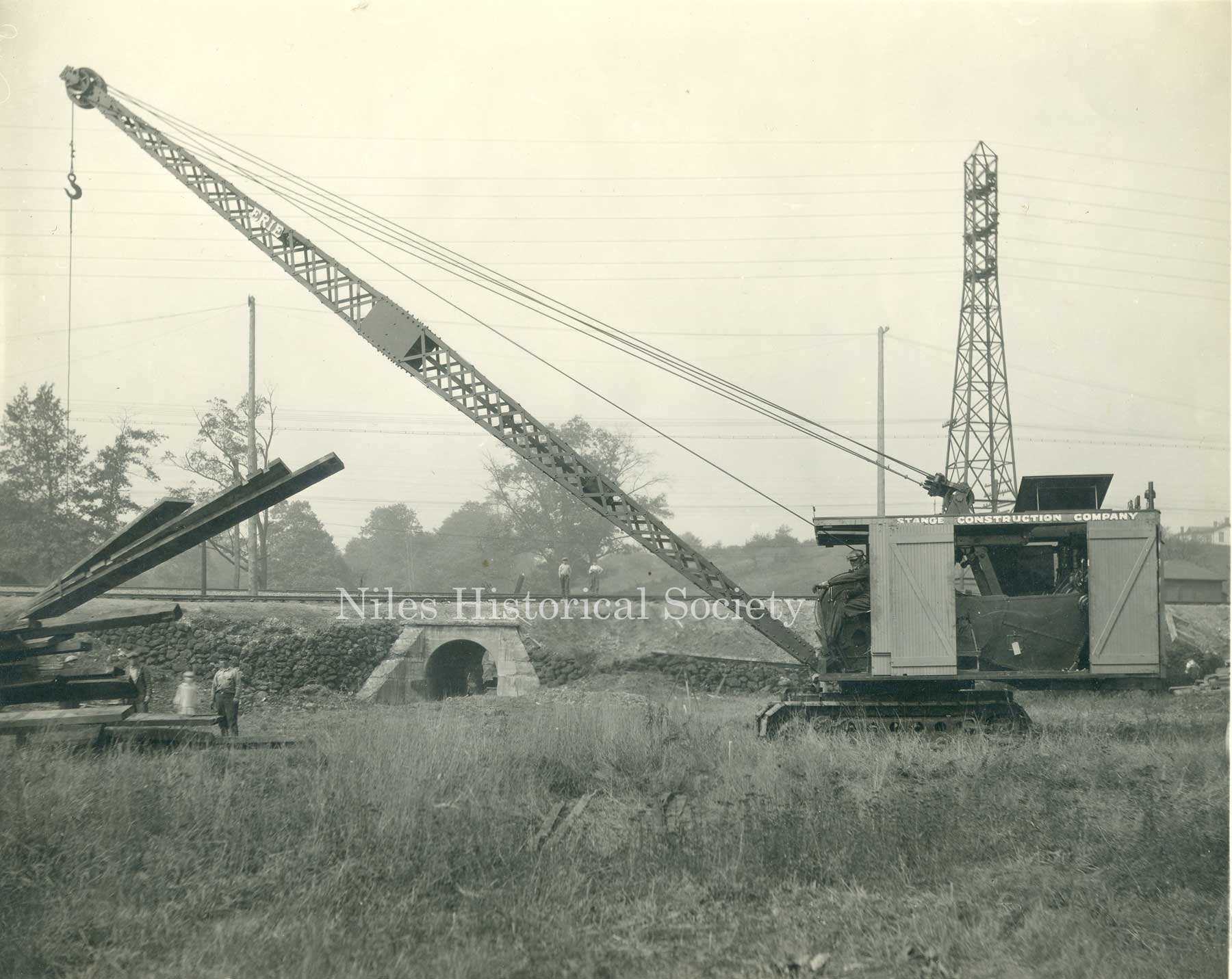
Steam shovel moving steel girders.
|
|
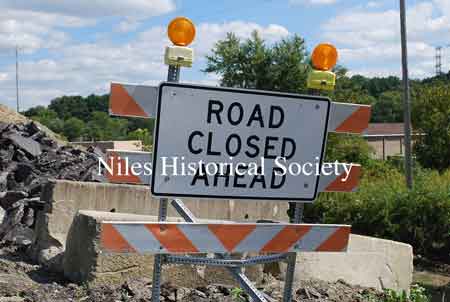
| The
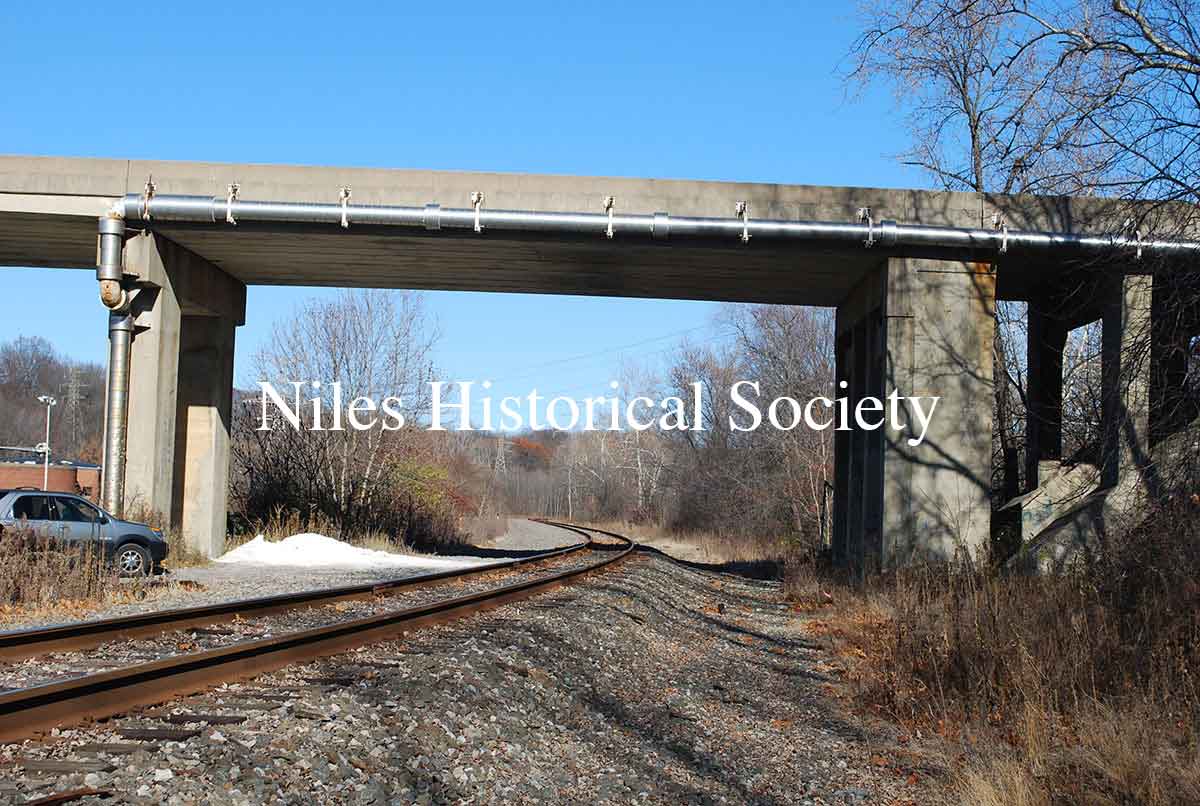
images below show the Niles-McDonald Bridge as it appeared in
2011 and the damage to the understructure that caused the bridge
to be closed to all traffic. |
|
| |
|
|
|
| |
 |

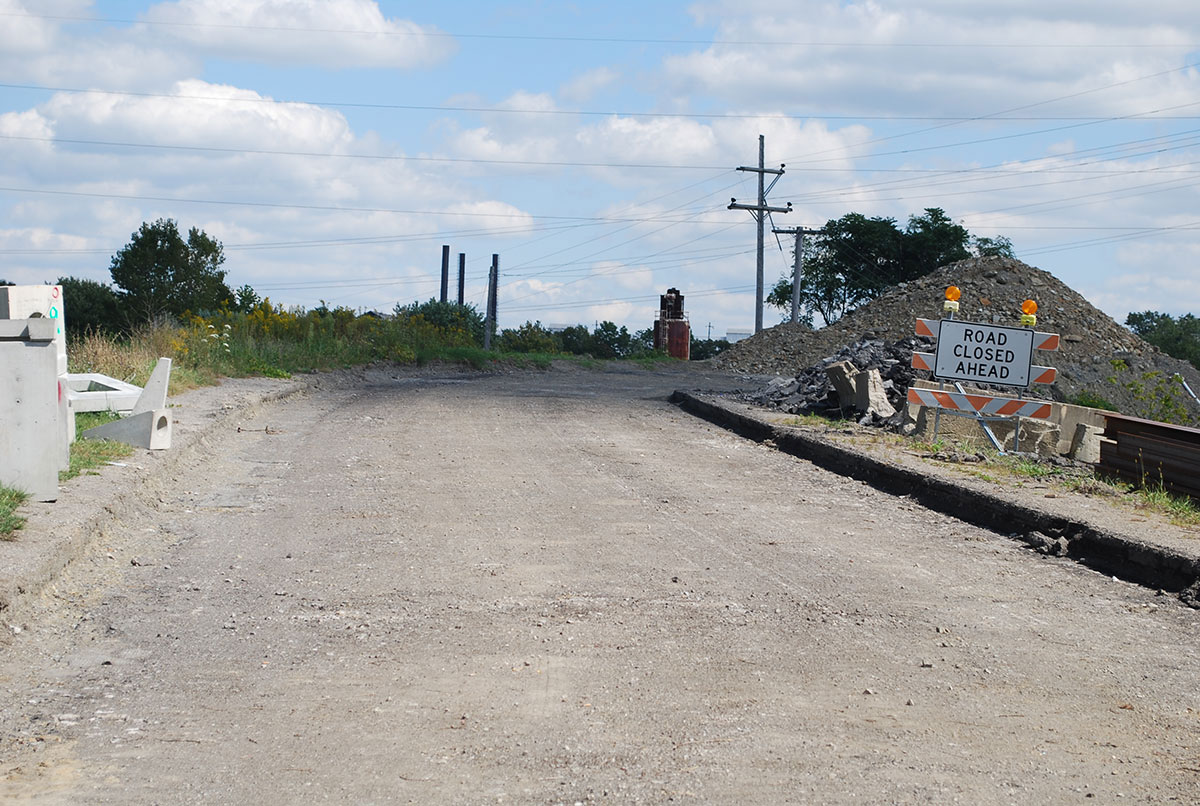
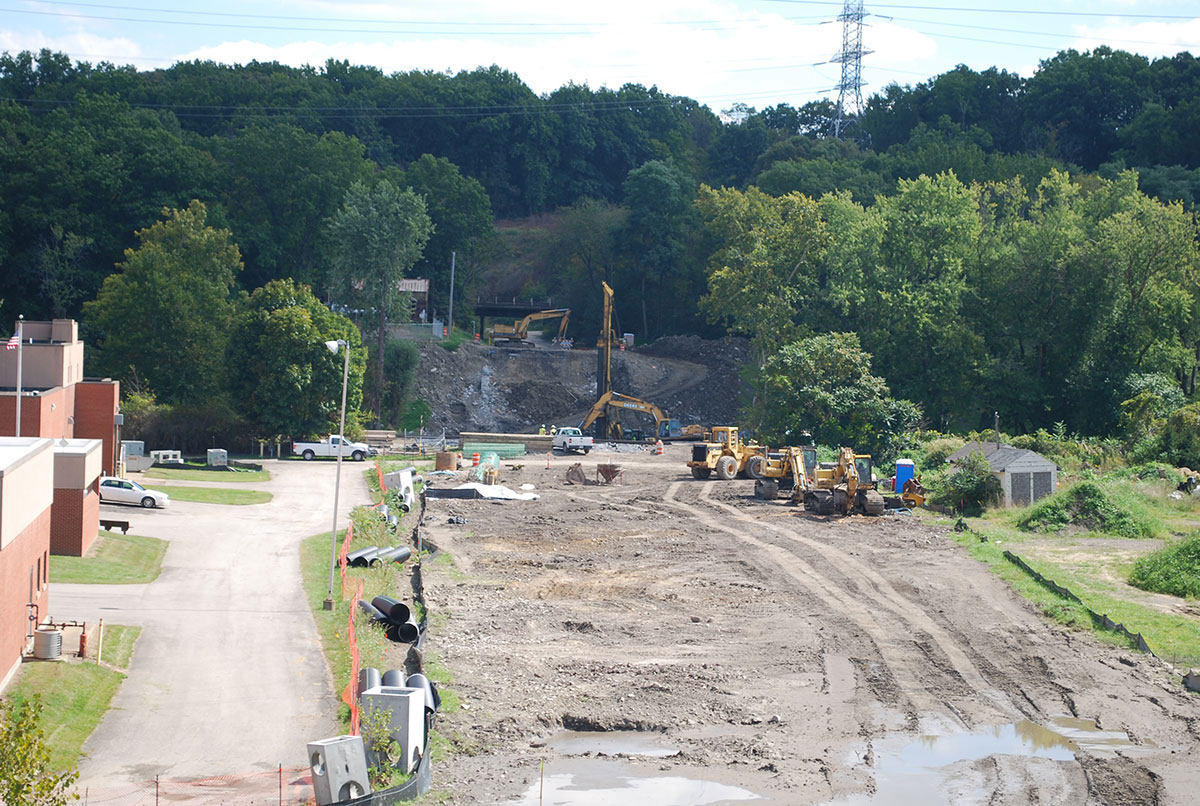
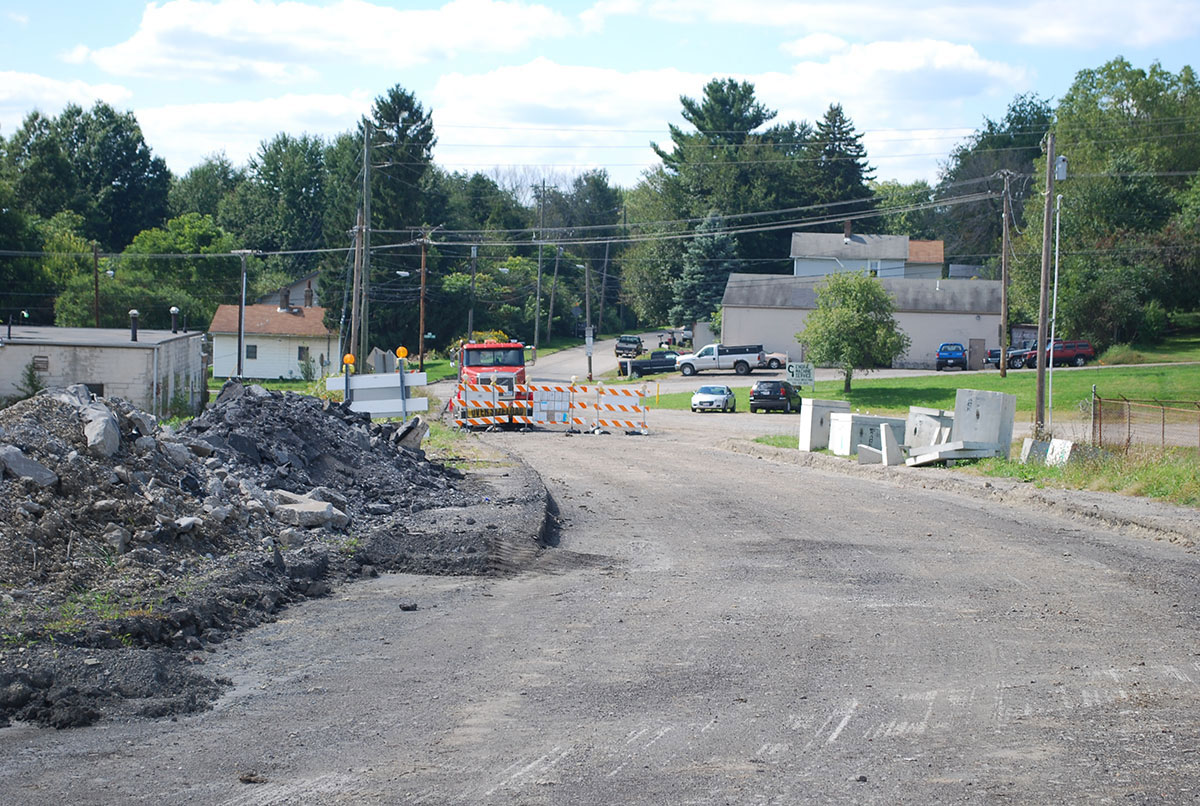
The final photos show the demolition
in October 2014 and the new steel beams being placed in March
2015. |
|
|
|
|
|
| July
31, 1976 Niles Daily Times by Bruce Stevens
Niles Daily News ran the caption the width of the page, announcing
“McDONALD THE VILLAGE BEAUTIFUL.”
Under it was a subheading proclaiming , “A Big Engineering
Task Is Nearing Completion With The New McDonald Viaduct.”
And now today, the headlines could read the same way after more
than 55 years.
The viaduct, which provides a direct route between Niles and McDonald,
has been undergoing a massive renovation program, which will cost
in the neighborhood of $1.2 million, for the past year. In that
time, the entire superstructure of the bridge has been replaced.
The work on the viaduct is now being completed almost to the day
of the project finishing date, with a tentative ribbon cutting
having been set by state officials for 10 a.m. Ed Ryser,
Trumbull County Engineer, explained that the project involved
using the original piers, abutments, foundation, and footings
through some repair work on these had to be done. What was replaced
was the superstructure of the viaduct, including the deck and
wearing surface, Ryser said, adding that in the bridge’s
superstructure,” we’ve simplified it
The bridge, which was rebuilt by the Soda Construction Co.,
is 933 long, is 40 feet over the Mahoning river, and averages
30 feet over the bend near the river.
Construction of the viaduct began in August of 1975. However,
the smoothness of the operation in 1976 bears little resemblance
to the events surrounding the original building of the structure
in the early 1900’s.
In 1921 the relationship between Niles and McDonald was something
less than it is today, and an article appearing in the Niles Daily
News on Friday, December 2, 1921 read like a proposed trade agreement
between nations separated by the Atlantic Ocean than cities divided
by the meandering Mahoning River. The article appeared under an
eight column headline on page one which read, Niles and McDonald
to Co-Ordinate, which was followed by another in a box that asked
“McDonald has done its share toward providing a direct route
into Niles. What has Niles done towards getting a direct route
from Niles into McDonald?”
The article contains an interview with James Freed, the
first mayor of the village of McDonald, who explains that the
viaduct is almost completed. McDonald has begun work on a road
(McKinley Blvd.) from the village to the viaduct, but complains
that the City of Niles has taken no action to extend the road
or connect the two cities.
He said, In arranging to build this important link of highway
between two cities, we did it with the wish of cordial relations,
for no man or town desires to be isolated, but does like to consort
with fellow men and sister cities. Niles in a business way has
more opportunities to offer us than McDonald has to offer Niles.
With proper bridge and road connection, it is natural that business
should go Niles way, and see no reason why our field should not
be legitimately cultivated by the Niles business men along trade
extension lines.” However, the citizens of Niles repeatedly
rejected the request for a road to be built through Russia Field
on the north side of the river, which would connect the two downtown
areas of the cities.
The bridge, however was completed in November of 1922, and the
Niles Daily News ran the following description of the viaduct.
“This bridge is 950 feet long and about 60 feet wide, with
a wing of 950 feet of road approach on the Niles side and 1225
feet approach on the McDonald side. The fill on the north side
is partially made, and one can by careful driving in a car negotiate
the crossing of the bridge and wind up around a steep incline
‘till the top of the south hill is reached. There one has
a fine view of the entire valley. One can see Niles, Girard, and
the rolling land between these two towns, and also get a view
down the river toward Youngstown. It is a sight that is entrancing
and beautiful and speaks of the wonderful development of the Mahoning
Valley within a ten mile stretch.
The viaduct, according to the newspaper articles, was built by
the Lake Erie Construction Co. of Cleveland and the Walsh Construction
Company, and the project was under supervision of W.E. Cook.
The cost of the building was between $400,000 and $500,000, which
was paid for by Trumbull County, Weathersfield , the Village of
McDonald and the Conneaut Land Company, which was the corporation
which handled all of the real estate interests of the Carnegie
Company.
The article also gave a colorful history of the site of the new
bridge, relating the following description:
“The new bridge and the road leading to McDonald is not
far from the old Indian camp at Salt Springs of the early days
where a number of early history parleys between the Indians and
the white settlers were held and where the killing of Chief George
and Spotted John by Joseph McMahon and Richard Story, took place
in 1800, after the Indians had abused the families of the slayers.”
The description continued, “A profitable hour can be spent
by one looking around the McDonald bridge site, and then on over
the hills to the modern, up-to-date and beautiful new village
of McDonald.”
Come August 5, Niles and McDonald residents will again have the
opportunity to partake of this ‘beautiful sight.”
|
|
|
|
|