Ward-Thomas Museum


Thomas House Families
Ward — Thomas
Museum
Home of the Niles Historical Society
503 Brown Street Niles, Ohio 44446
Click here to become a Niles Historical Society Member or to renew your membership
Click on any photograph to view a larger image, click on image again to zoom into photograph.
View of Ward-Thomas House |
Ward-Thomas
Homestead Has Noteworthy Past New: Audio
Tour of the Thomas House One of the city’s most elegant
homes lies tucked away in a secluded area of Brown Street. |
| |
|
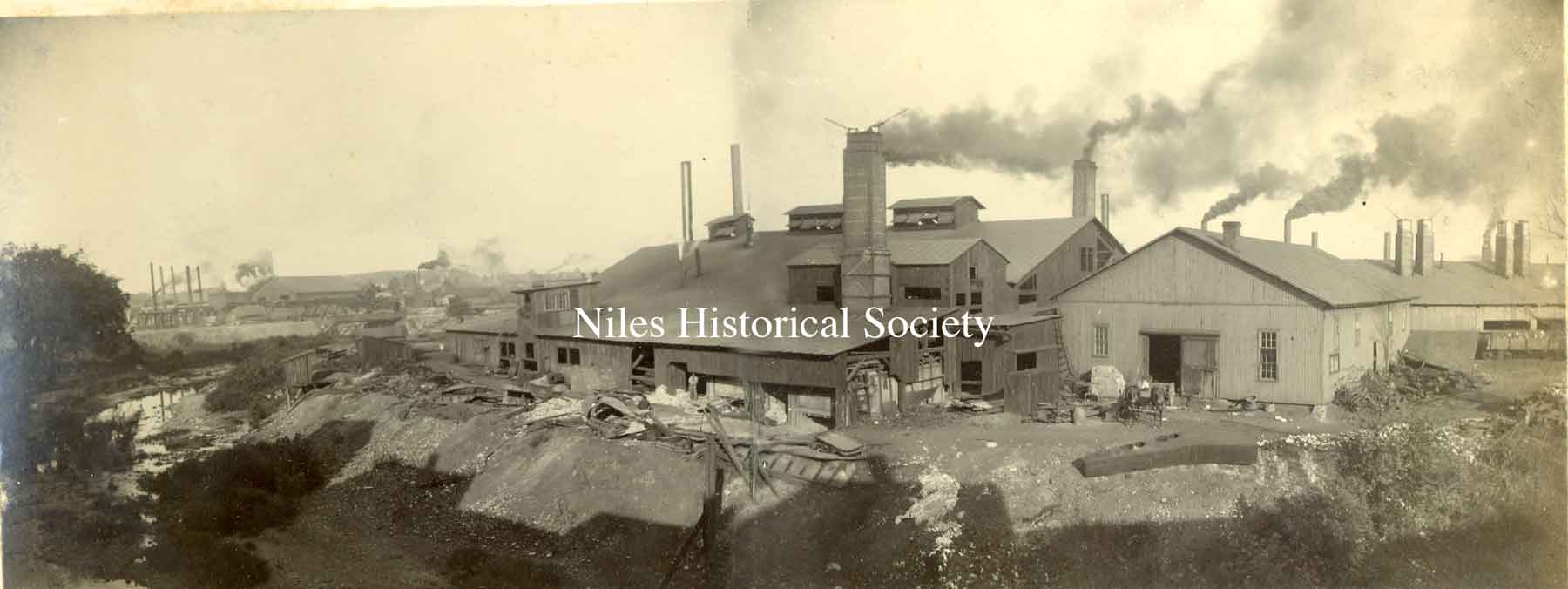
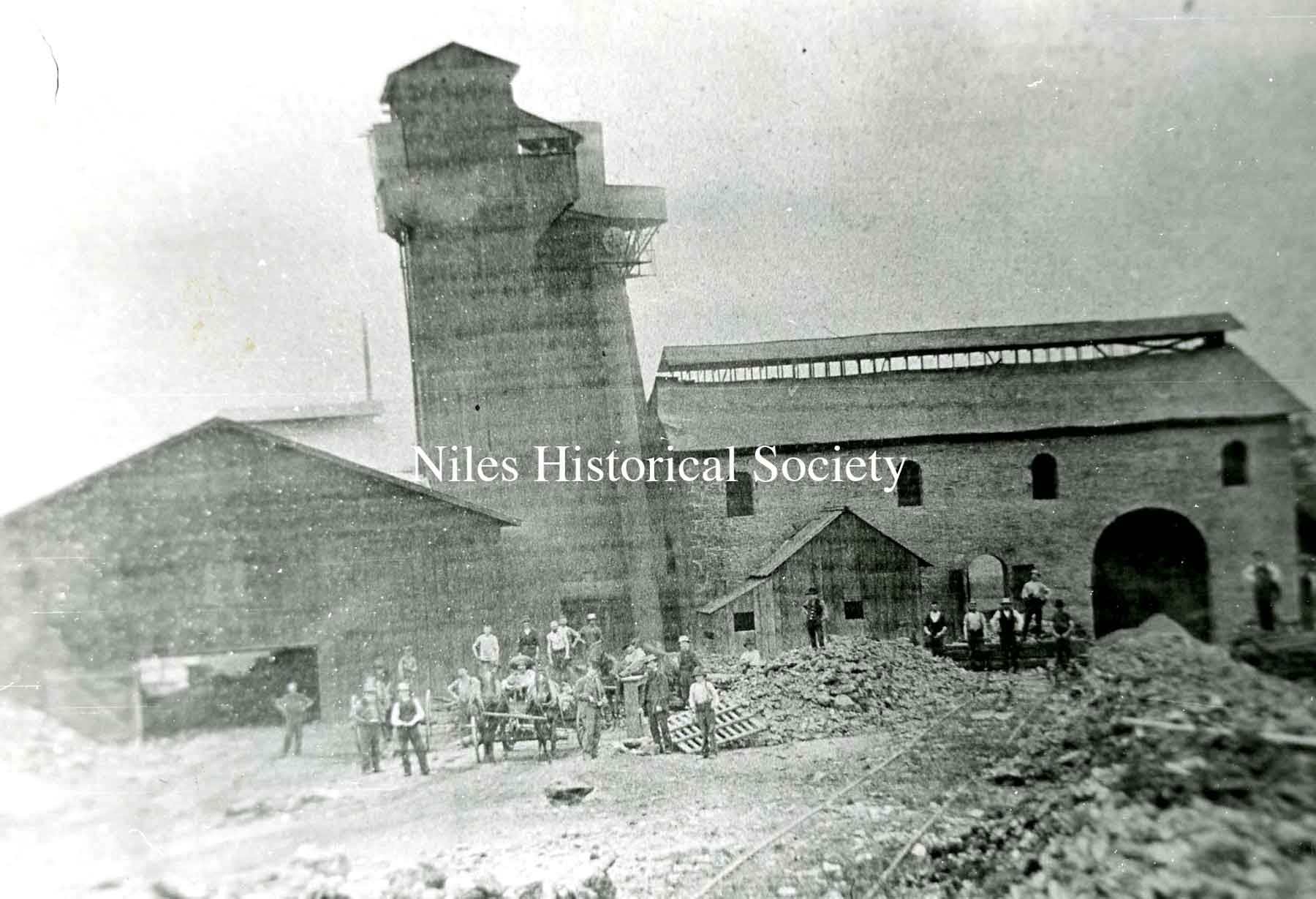
Thomas Steel Plant Located on the east bank of the Mosquito Creek, south of the Erie RR, it was originally the William Ward and Company, built in 1870. After the failure of the Ward Company, John R. Thomas bought it in 1879 and enlarged it. It was acquired and enlarged again by the Carnegie Steel Company in 1900 and dismantled in 1925. PO1.795 |
James Ward, Sr. was born November 25, 1813 near Dudley, Straffordshire, England and came to America in 1817. Ward lived in Pittsburgh, Pennsylvania with his parents until 1841 when the family moved to Niles and Ward became the top executive of the James Ward and Company. It’s believed that the Ward family came to Niles because of the availability of pig iron and because transporting the materials was cheap and convenient via the canal. Ward’s first plant was a rolling mill, which was located on the north bank of the Mahoning River and a mill which rolled out the first iron in the Mahoning Valley. The plant consisted of one stand of ‘muck bar rolls’ and three puddling furnaces, producing such products as bar iron, sheet iron, horse shoe iron and tire iron. In 1859, Ward built the ‘Elizabeth
furnace’, named after his wife, the former Elizabeth
Dithridge, whom he married in 1835. The company was built
to supply pig iron for his rolling mill. |
| |
|
|
|
Because of the demand for iron products during the Civil War, Ward’s company continued to prosper, bringing the family considerable wealth. During that period of time, the Ward family lived in a house which was located at the corner of Park Avenue and Main Street, which later became a commercial hotel and in 1918 became the location of the Security Dollar Bank. Today (2023) Farmer’s National Bank occupies the site. Arrow points to Ward residence at the corner of Park Avenue and Main Street. PO1.915 |
| |
|
|
|
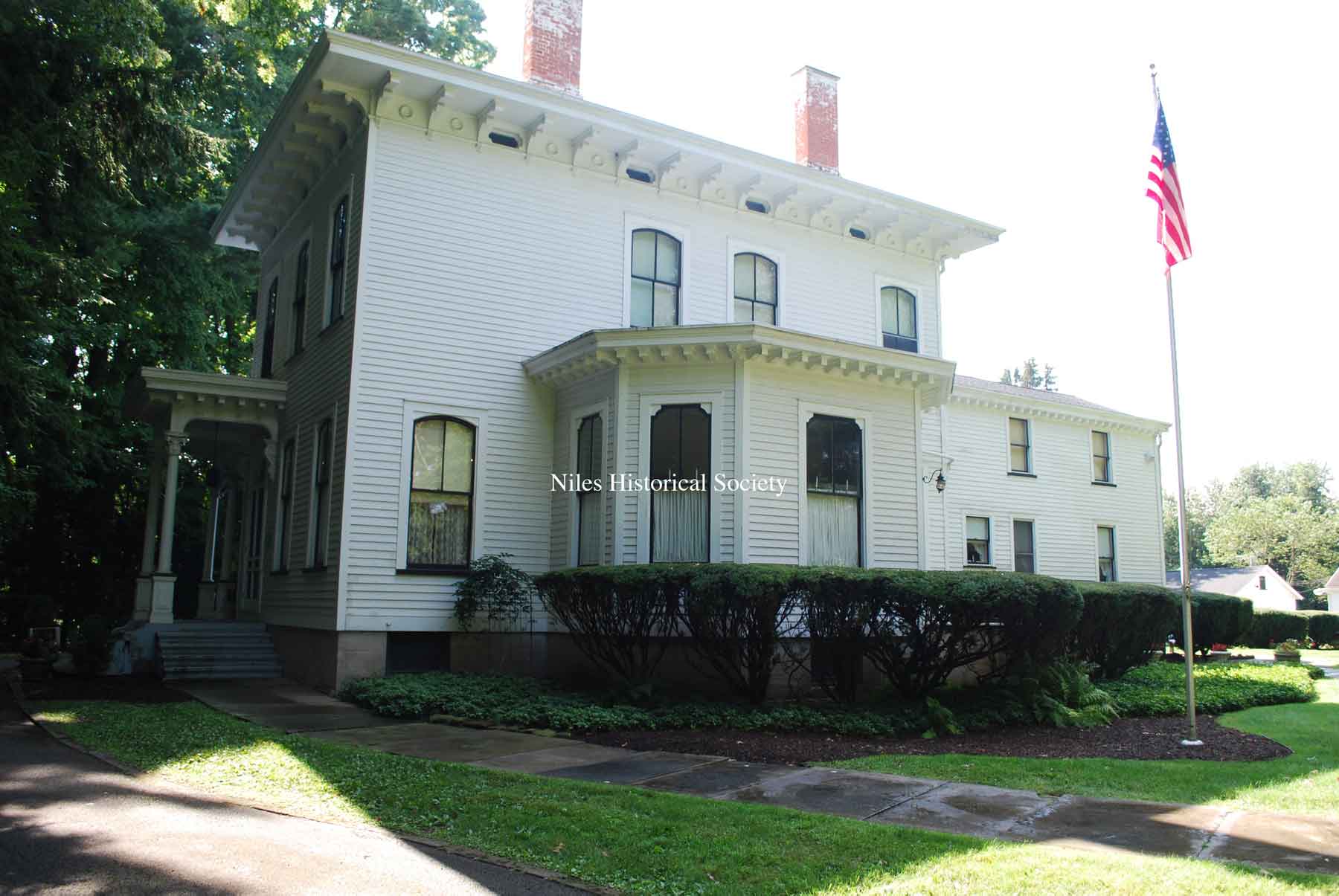
Due to the Ward family’s new found wealth, James Ward saw fit to build a new home, one which would be more suitable for a man of his stature. In 1862, Ward borrowed $5,760 from the Western Reserve Bank and built a more suitable home on 115.26 acres of land on Brown Street. The home, designed of Italianate architecture, consisted of five bedrooms, two parlors, a dining room, library, kitchen, solarium, and several smaller rooms which were located near the servant quarters. A barn which housed horses, a carriage house, along with caretaker quarters were located on the property. The house had seven marble fireplaces, two of
which were located in the library, and a narrow solid walnut staircase.
The molding, located in all the rooms on the first and second
floors, was carved by hand. An outdoor oven was located on the
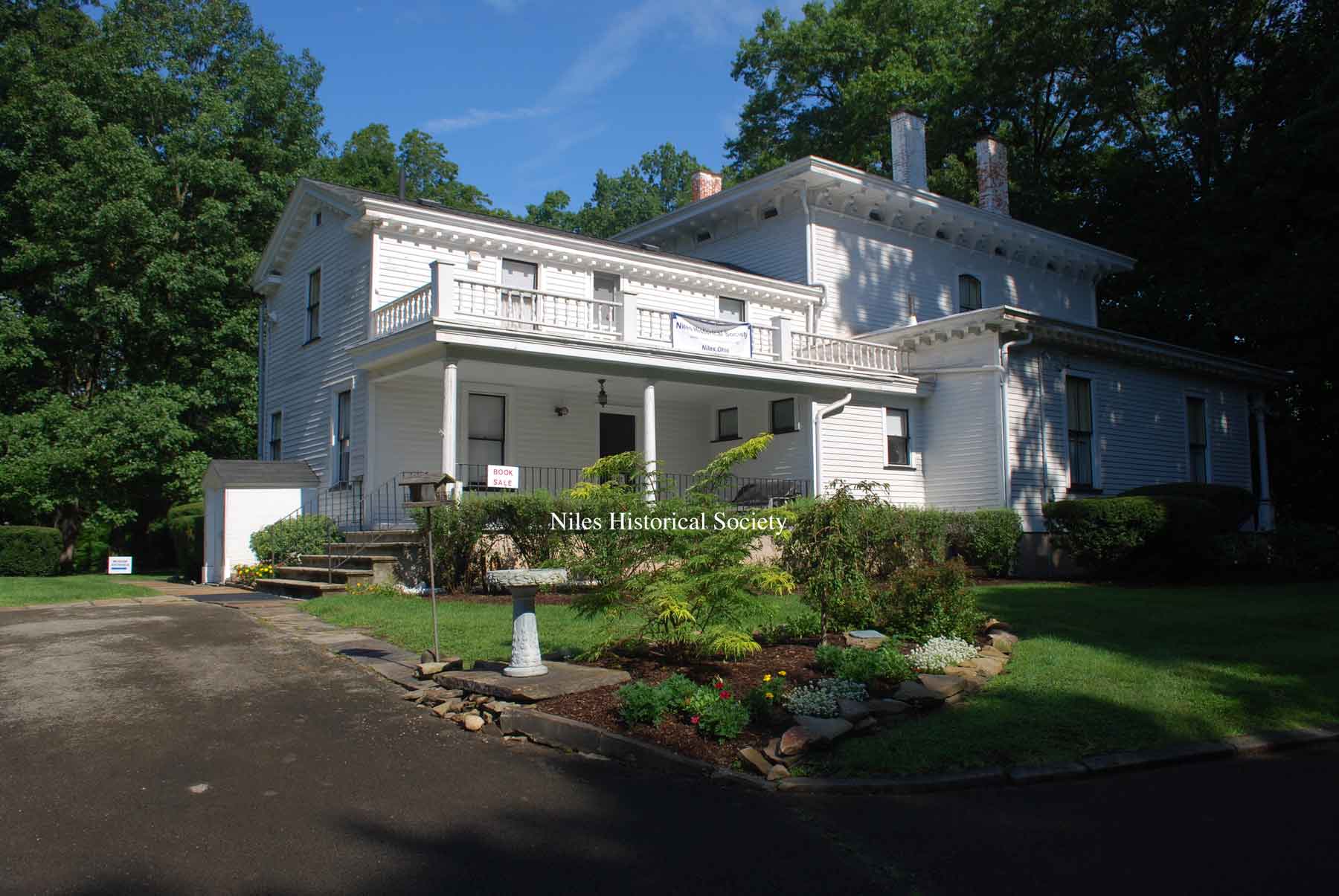
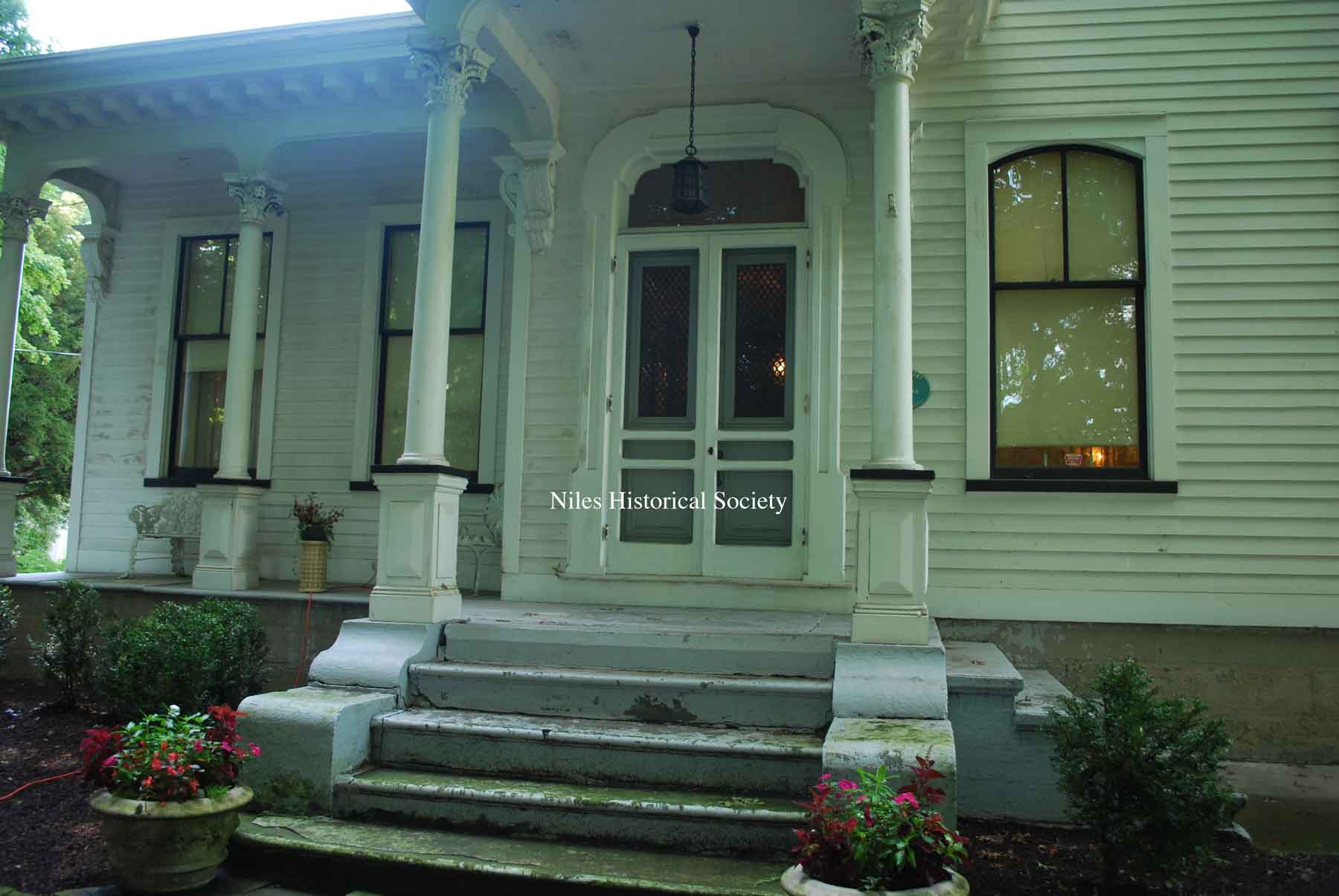
property near the home. On July 24, 1864. Ward was shot and killed by an intoxicated villager following a mid-week prayer service. Ward’s son, James Jr., the only one of the Ward’s seven children to reach adulthood, assumed control of the Ward Empire. Top: Rear view of the Ward-Thomas Museum. Bottom: View of main entrance of the Ward-Thomas Museum. |
|
Built in 1870 by William Ward and known as the Wm. Ward & Co blast Furnace, it failed in the Panic of 1873. It was purchased by John R. Thomas in 1879 who increased capacity from 25 to 320 tons. In 1900 it became part of the Carnegie Steel Co. but was operated only in times of great demand for steel, the last period of steady use being WWI. Closed in 1920, dismantled in 1925. This picture shows the original Ward Blast Furnace. PO1.635 |
Under the leadership of James Ward II, the Ward companies continued to prosper and in 1866, a new mill capable of increased capacity, was built near the old plant. The following year, ward organized a subsidiary, The Falcon Iron and Nail Works, and built a plant along the east bank of Mosquito Creek. It was also during 1867 that Ward sent one of his employees to Russia to study how to manufacture Russian iron, a high grade product in demand by stove manufacturers. Ward decided to duplicate the Russian product and soon built the Russia iron Mill on the north bank of the Mahoning River. Hard times hit Niles during the Panic of 1873 and many companies, including Ward Enterprises, were forced into bankruptcy. Ward made several attempts in the years to follow to revive the companies but he was unable to do so. The First National Bank foreclosed on the Ward mansion in July 1887 and on December 12, 1888 the home was sold to Margaret Thomas for $1,000 during a sheriff’s sale. |
| |
|
|
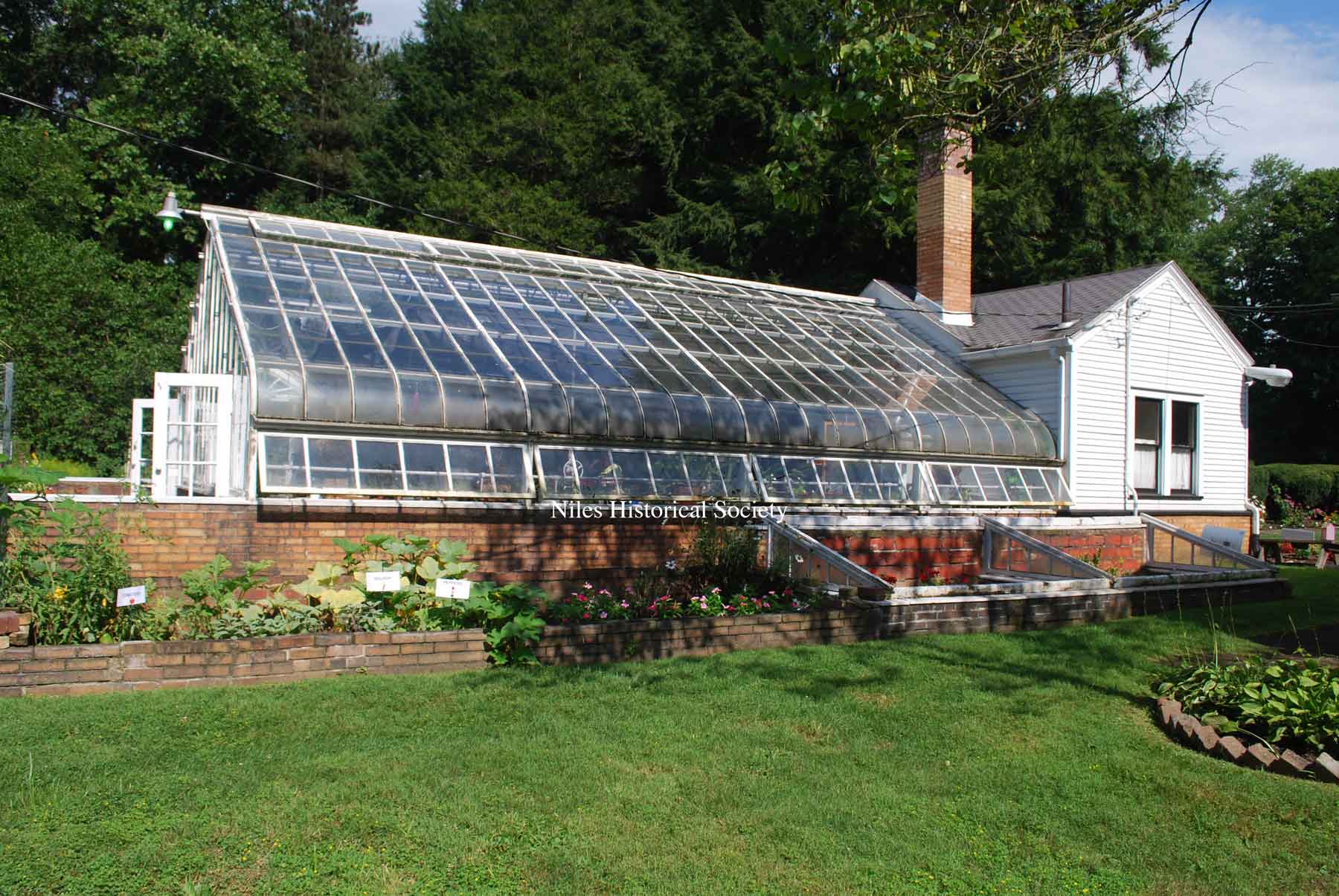
Glass roofed greenhouse |
The mansion was now home to Margaret Thomas and her husband, John, who founded the Niles Firebrick Company in 1872; and their children, John, Thomas, W. Aubrey, Margaretta and Mary Anne. The Thomas family affectionately nicknamed the home ‘Brynhyfryd’, a Welsh name for Pleasant Hill. Margaret Thomas spent much time entertaining guests in the front parlor of the home, serving tea and chatting with her friends. Mrs. Thomas also loved flowers and she made certain there were always fresh flowers in the house. In fact, Mrs. Thomas grew most of the flowers herself in the greenhouse which was located just a few yards from the main house. While Mrs. Thomas spent most of her time caring for her family, her children pursued careers and became involved in projects of their own. |
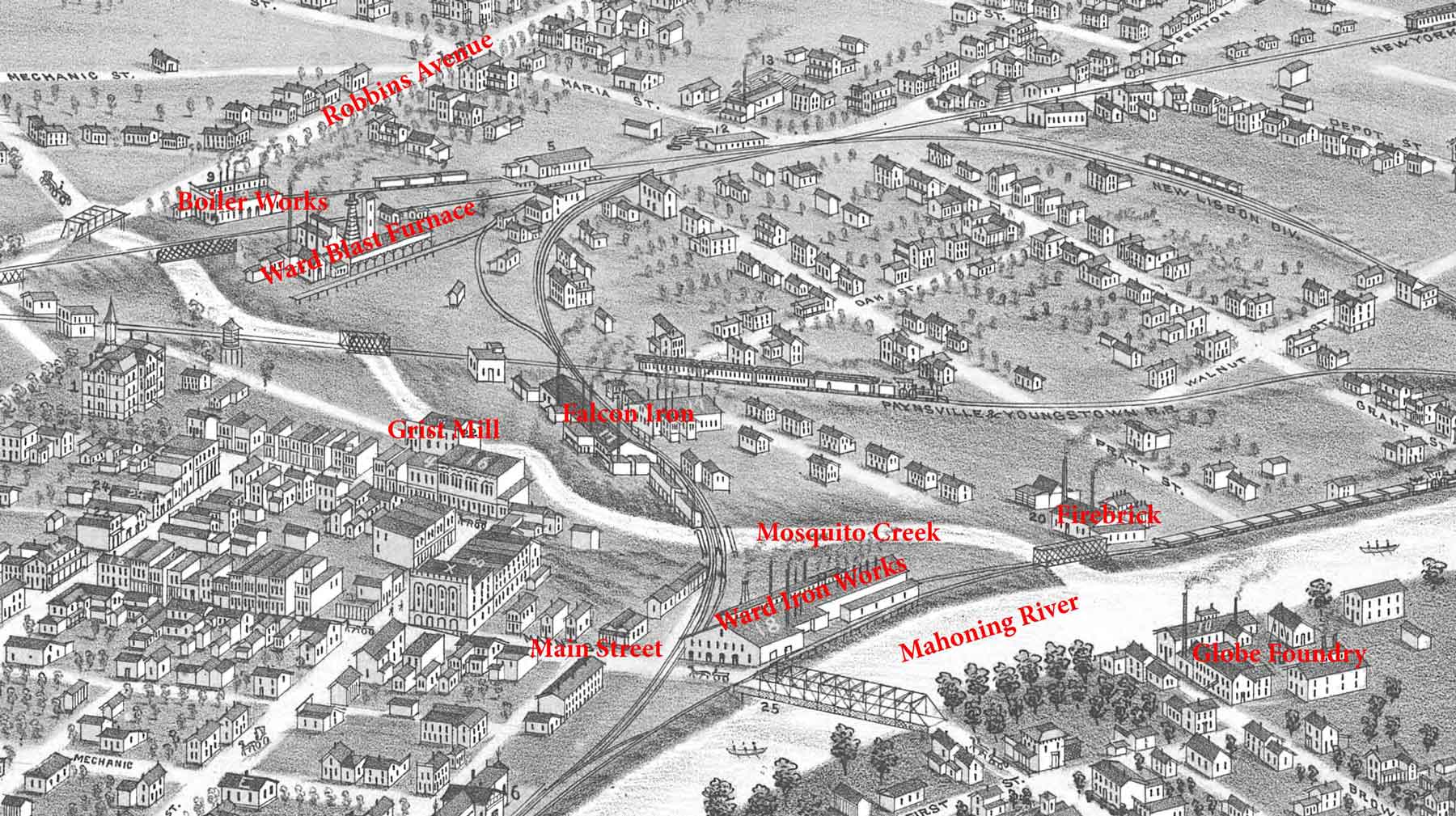 |
Thomas worked with his father while W. Aubrey became involved in organizing the Mahoning Valley Steel Company and later became the first president of the Dollar Bank in 1903 and also served as a U.S. Congressman during the period 1907-1909. Margaretta, was instrumental in developing a city park (Central Park) on East State Street. Map showing locations of various industries along the Mosquito Creek and the Mahoning River in Niles. |
|
Dr. Thomas Clingan House built
in 1905 |
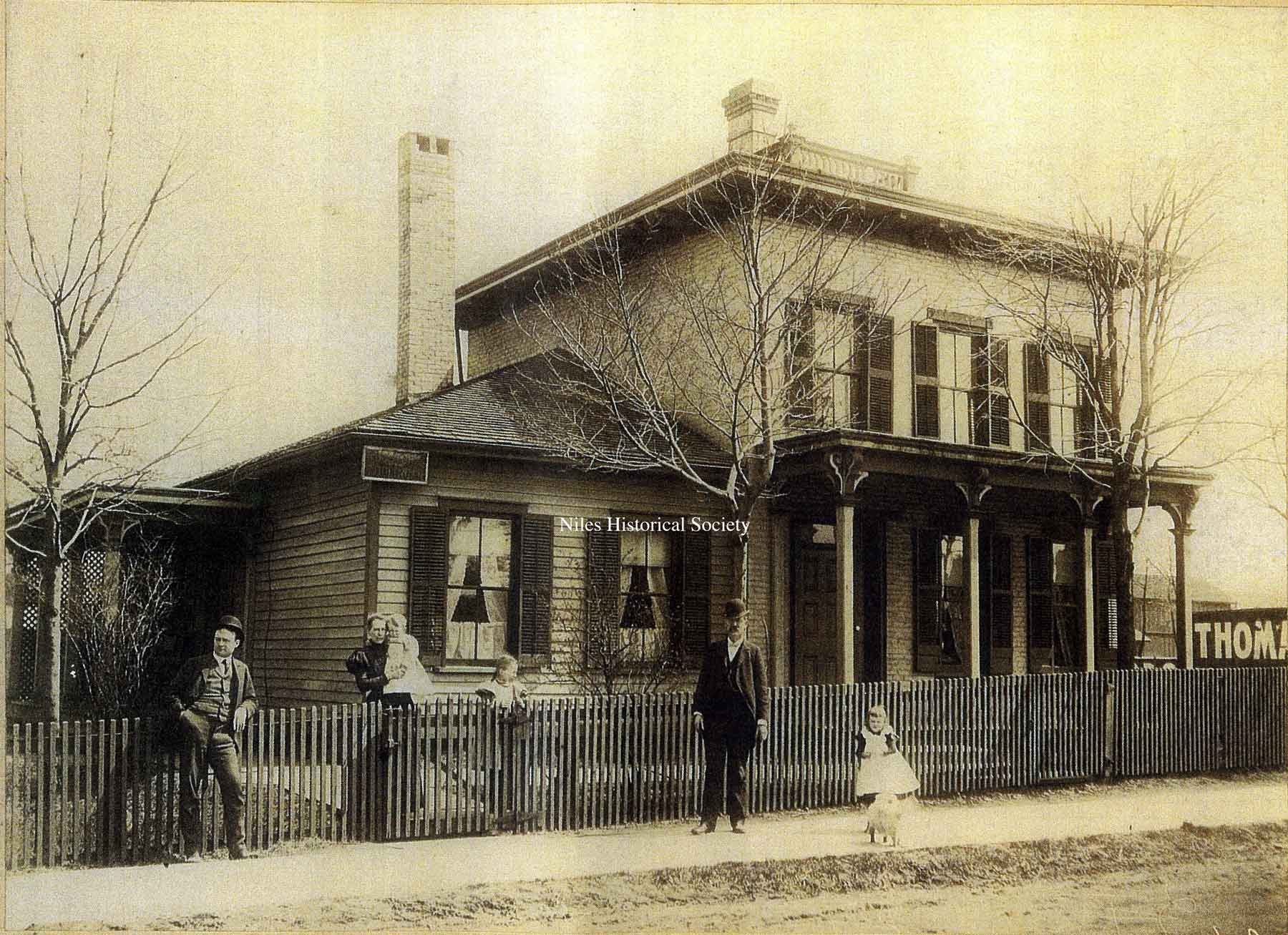
John Thomas, who died in 1898, also was the founder of the Thomas Furnace Company and the Aetna Iron Company. In 1877, he purchased and rebuilt the old William Ward Furnace Company which later became the Carnegie Illinois Division of the U.S. Steel Corporation. Margaret Thomas continued to live in the home after her husband’s death and she eventually deeded the home to her daughter. Mary Anne, who married Jacob Waddell. Margaretta Thomas married Dr. Thomas Clingan and built a home of their own a short distance from the Thomas Mansion. Pictured left is the Dr. Thomas Clingan house built in 1905 close to the Mahoning River and was later inundated by the waters of the 1913 Flood. The next year, the family moved into their new residence known as the Clingan mansion at 547 South Main Street. L-R William Aubrey Thomas, Margaret Thomas Clingan with John Clingan, Margaret Clingan Wick, T.E. Thomas or Dr. Clingan and Elizabeth Clingan Hosack in the photograph. William Aubrey and Thomas Evan are brothers of Margaret Thomas Clingan. T.E. Thomas was married to Adaline Robbins and lived in the corner house opposite 503 Brown Street. (Mary Ann Thomas Waddell’s house). |
|
Niles Trust Company Building |
Jacob Waddell, organized and became President of the Mahoning Valley Steel Company. He also served as President of the Niles Bank Company and became the first Director of the Mahoning Valley Sanitary District. During the time the Waddell family lived in the home, Calvin Coolidge, who later became the 13th President of the United States, spent a night in the home when he was vice-president of the United States. Coolidge was in Niles during a ceremony at the McKinley Memorial. In 1931, Jacob and Mary Waddell donated a substantial amount of land to the City of Niles and the land became known as Waddell Park. Mary Waddell lived in the home following her
husband’s death in 1939 and after her death in 1969, the
house and property was deeded to her heirs. In 1979, the house
and property was deeded to the City of Niles and in 1983 the Niles
Historical Society was entrusted by the city to develop the home
into a museum. Photograph taken shortly after completion of the Niles Trust Co. building in 1930. Exterior frontage and Large front doors. PO1.33 |
 |
The house today is known as the Ward–Thomas Museum and the home was placed on the National Register of Historic places in February 1984. The house never carried the distinction of being the Ward–Thomas–Waddell House because Mary Waddell was the former Mary Anne Thomas. The Ward–Thomas House is two–thirds of its original size today. A back kitchen was dismantled and one of the seven marble fireplaces was replaced with a wooden fireplace. Portraits of John and Mary Thomas hang above
the two fireplaces in the library and the parlor in the home has
been named the ‘Mary Waddell Room’ in her honor. Mr. and Mrs. Jacob Waddell. PO7.60 |
|
|
|