Ward-Thomas Museum


Niles Post Office
Ward — Thomas
Museum
Home of the Niles Historical Society
503 Brown Street Niles, Ohio 44446
Click here to become a Niles Historical Society Member or to renew your membership
Click on any photograph to view a larger image, click on image again to zoom into photograph.
|
The early post office on East State Street about 1912. PO1.383 |
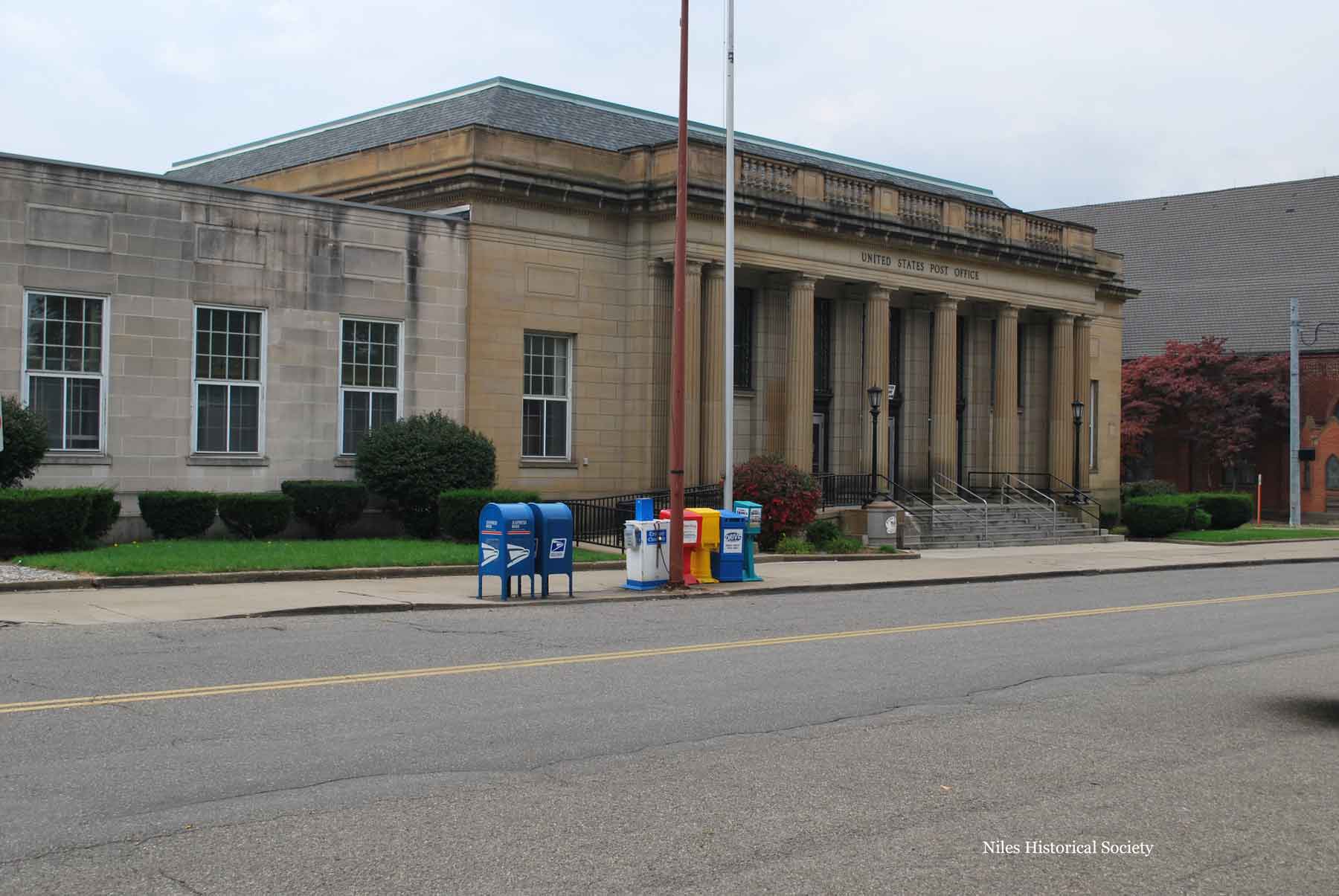
Niles Post Office. By 1834 the settlement had reached the proper proportions of a village so James Heaton planned the streets, marked off the lot division and named the village. Until 1834 the settlement was appropriately called “Heaton’s Furnace”, but James Heaton gave it a new name “Nilestown” in honor of Hezekiah Niles, editor of the Niles Register, a Baltimore paper, who’s Whig (early political party) principals Heaton greatly admired. Nilestown remained the name until 1843 when Ambrose Mason, Postmaster, for convenience shortened it to “Niles” and that is how Niles got its name.” The post office was located on East State Street, then called Mill Street and Furnace Street, and was in use until a new post office was built on West Park Avenue. This post office opend January 1, 1933. |
|
| |
||
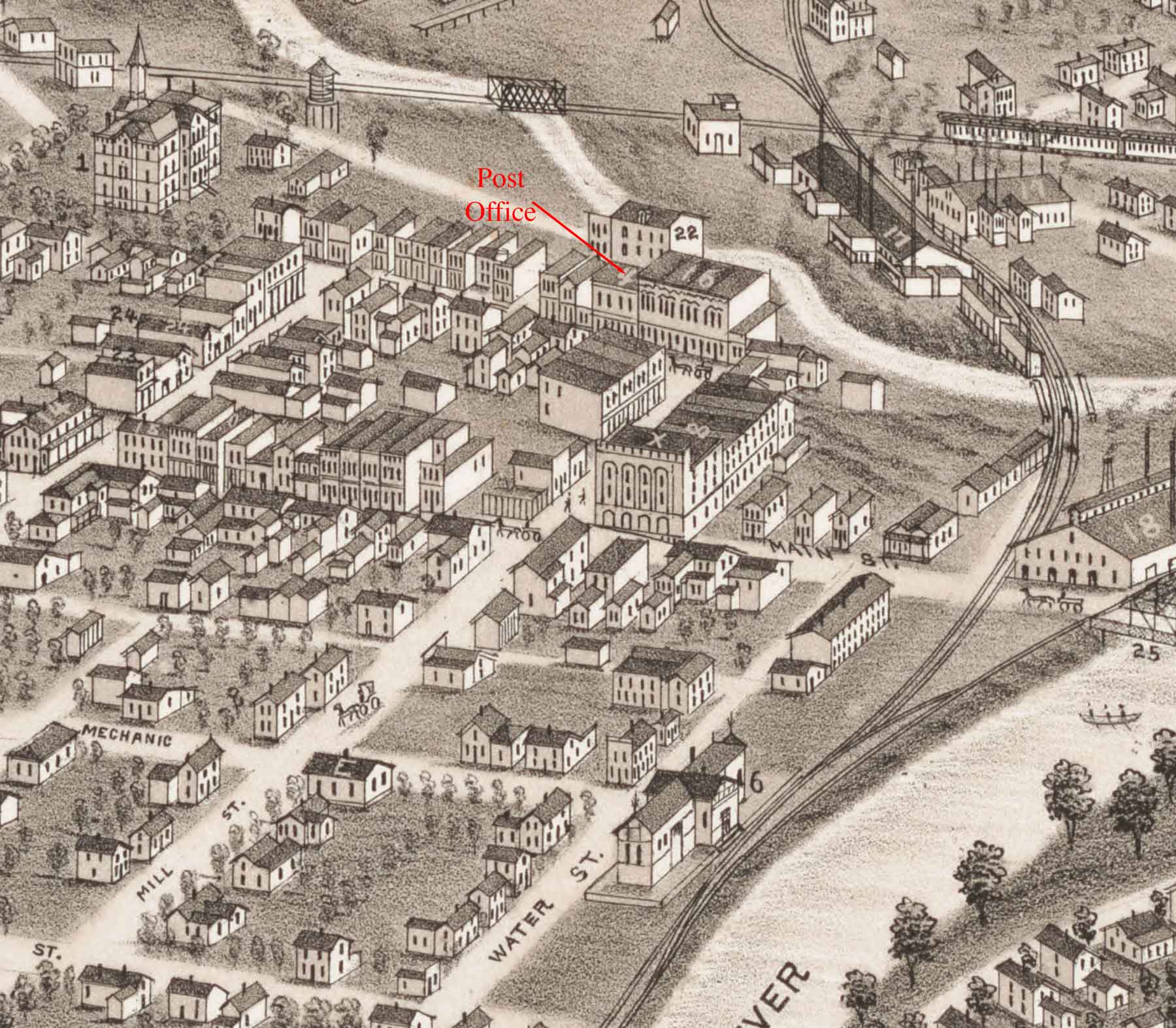
Post Office location on 1882 panorama map. |
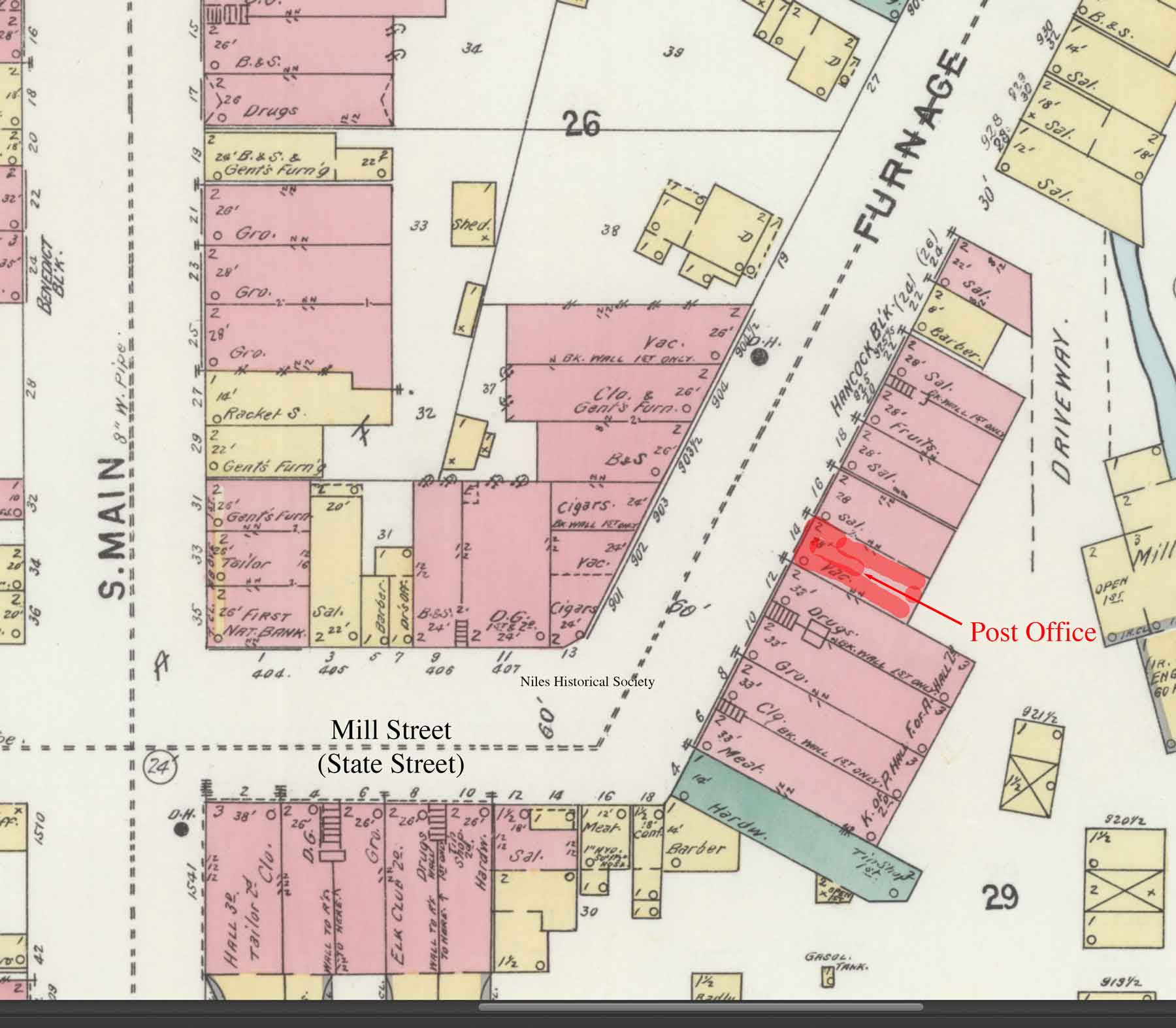
Post Office location on 1893 map. |
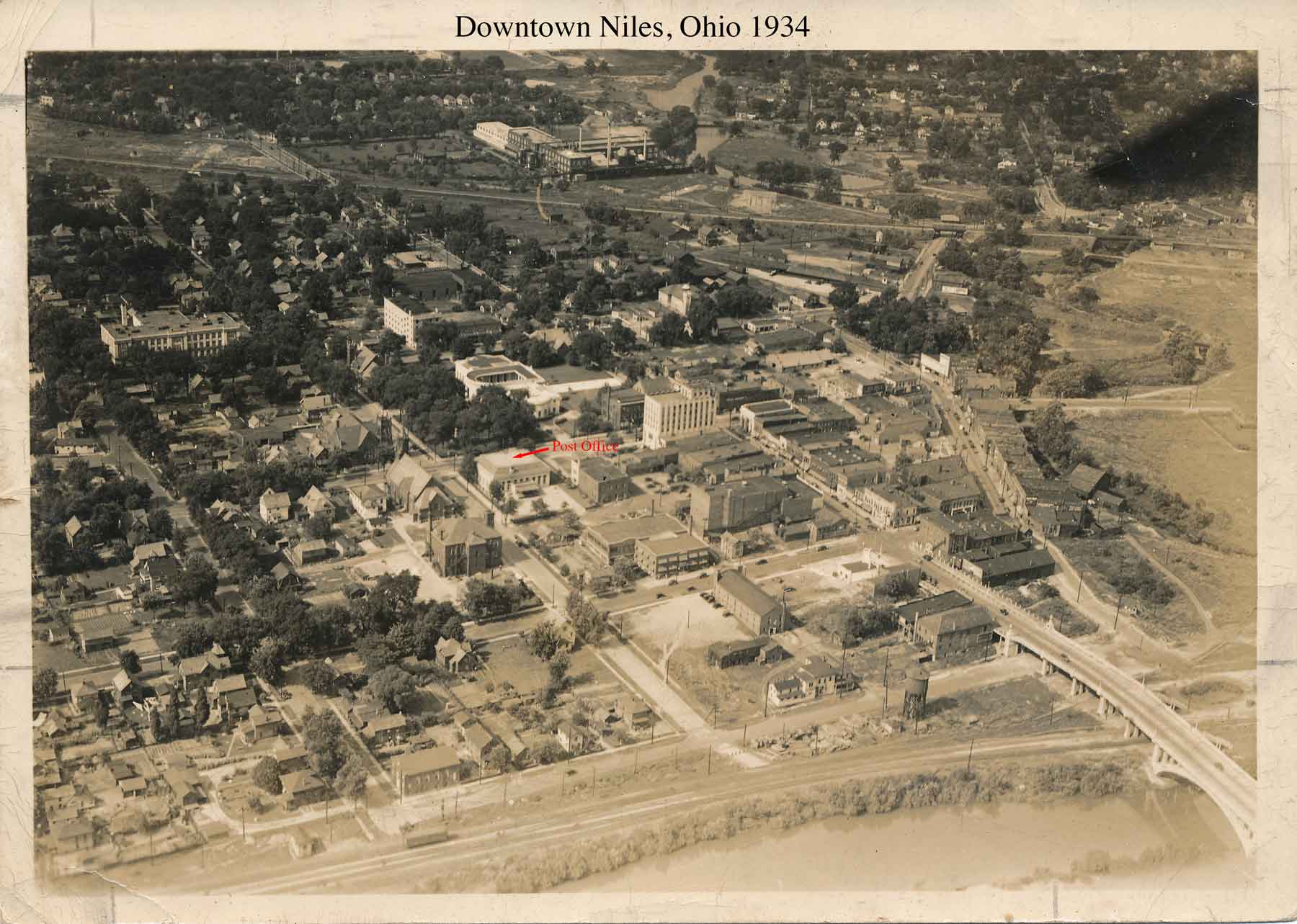
New post office location on 1934 City Map. |
|
|
||
|
A postcard view of the Niles Post Office on inspection day, December 29, 1932. The Post Office was opened to the public on January 2, 1933. PO1.385 |
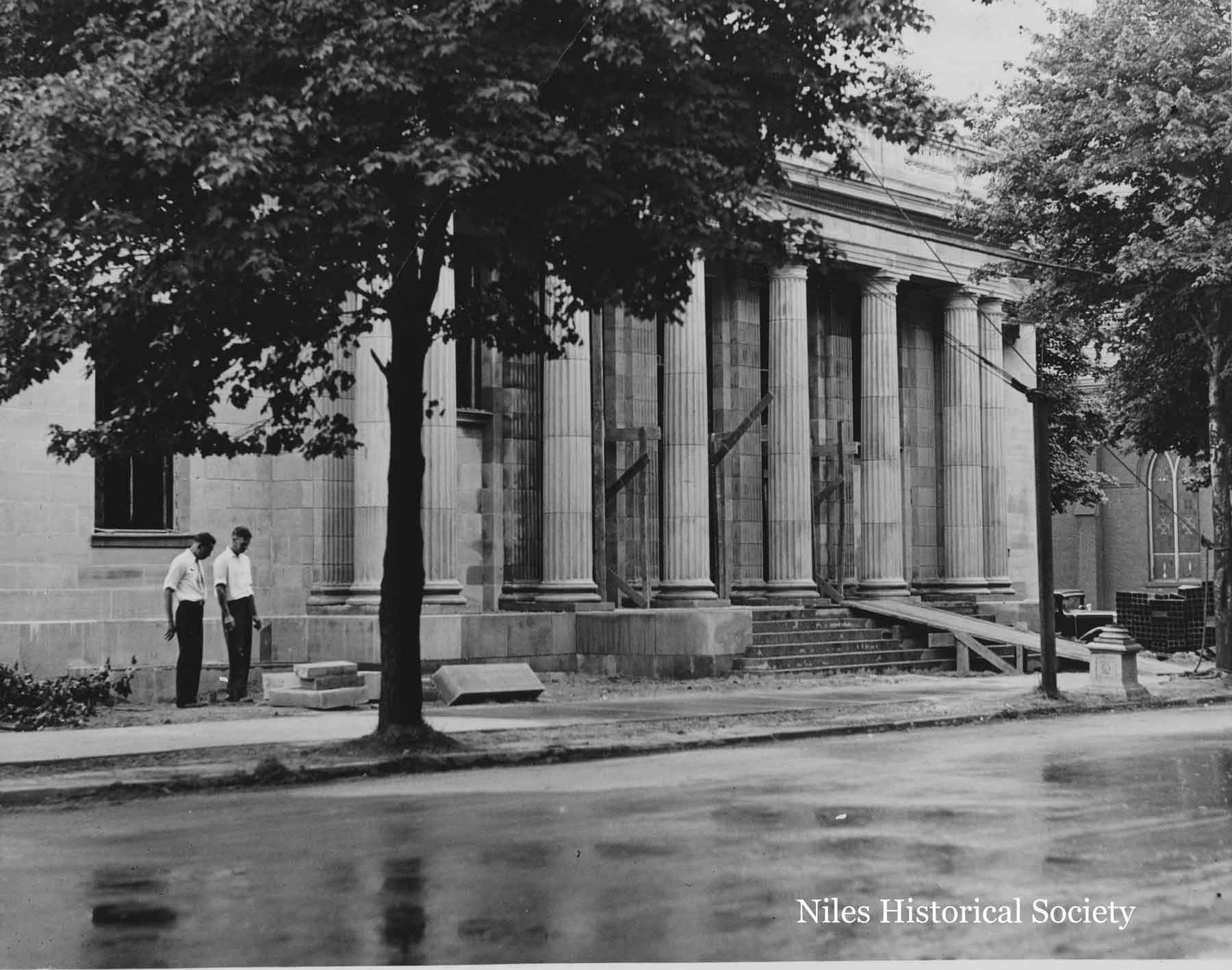
Photograph of Niles Post Office, August 1933. Exterior of the building is of Ohio sandstone. Through the efforts of J.D. Waddell, R.M. Smith, Paul Hodge, and D.J. Thomas, the eight large sandstone pillars across the facade were added to the plans of the building. These pillars were desired to correspond with the McKinley Memorial. |
It was in 1913 that
the first move was made for the United States Post Office which
is one of the outstanding buildings in the City of Niles.
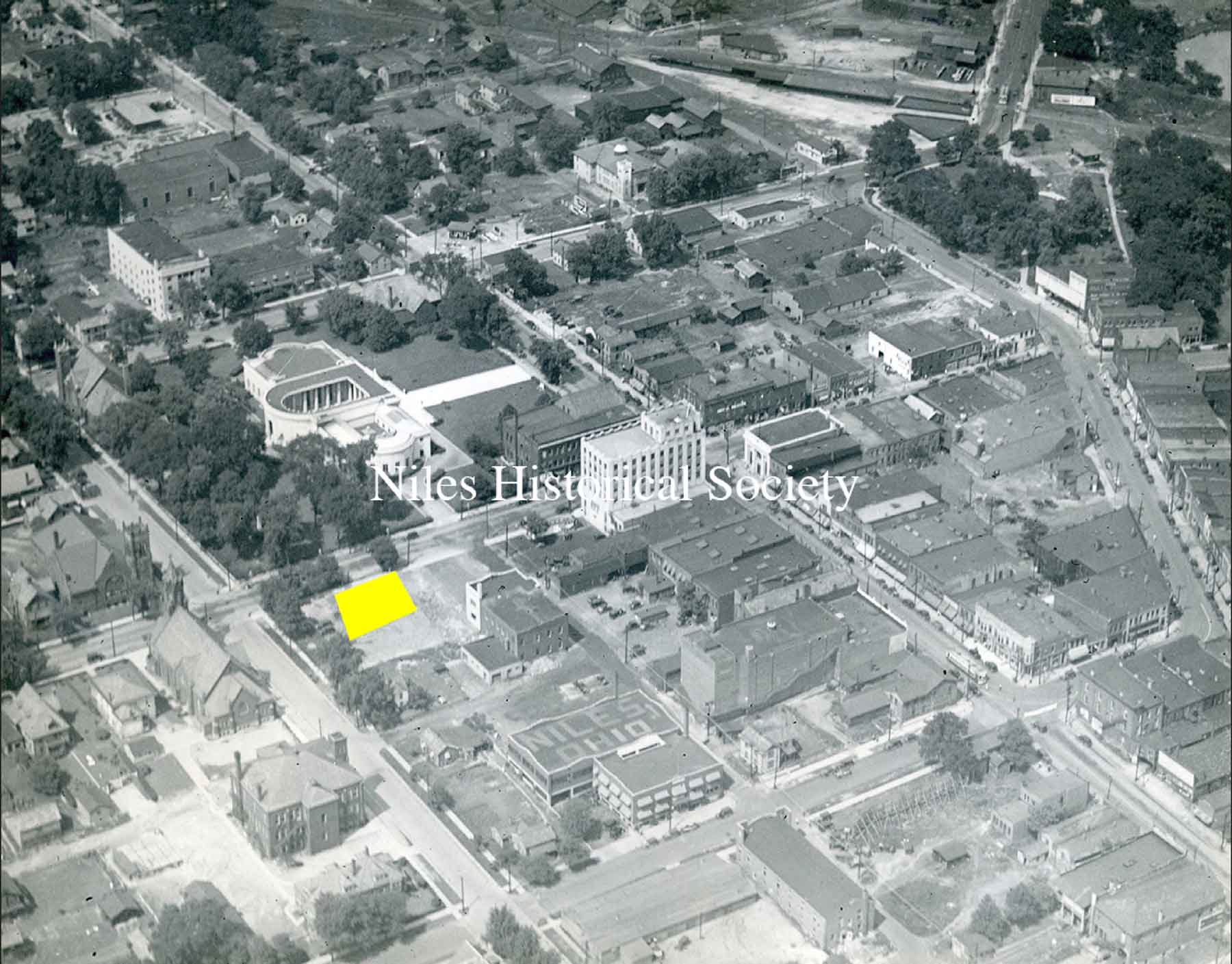
At that time, the lot on which the building stands, was bought by the government through the efforts of W. Aubrey Thomas, formerly of this city who is now living in Alabama. At that time he was a congressman from this district. It is said that the price paid for the lot was approximately $15,000. The late W.R. Thomas was postmaster at the time the post office site was purchased. In 1931 a plot of land 420-1/2 feet in size was bought from the heirs of the late William Thomas and added to the government site. |
This 1932 photograph shows the later stages of the post office construction. The main columns are in place and the construction of the entrance steps is underway. |
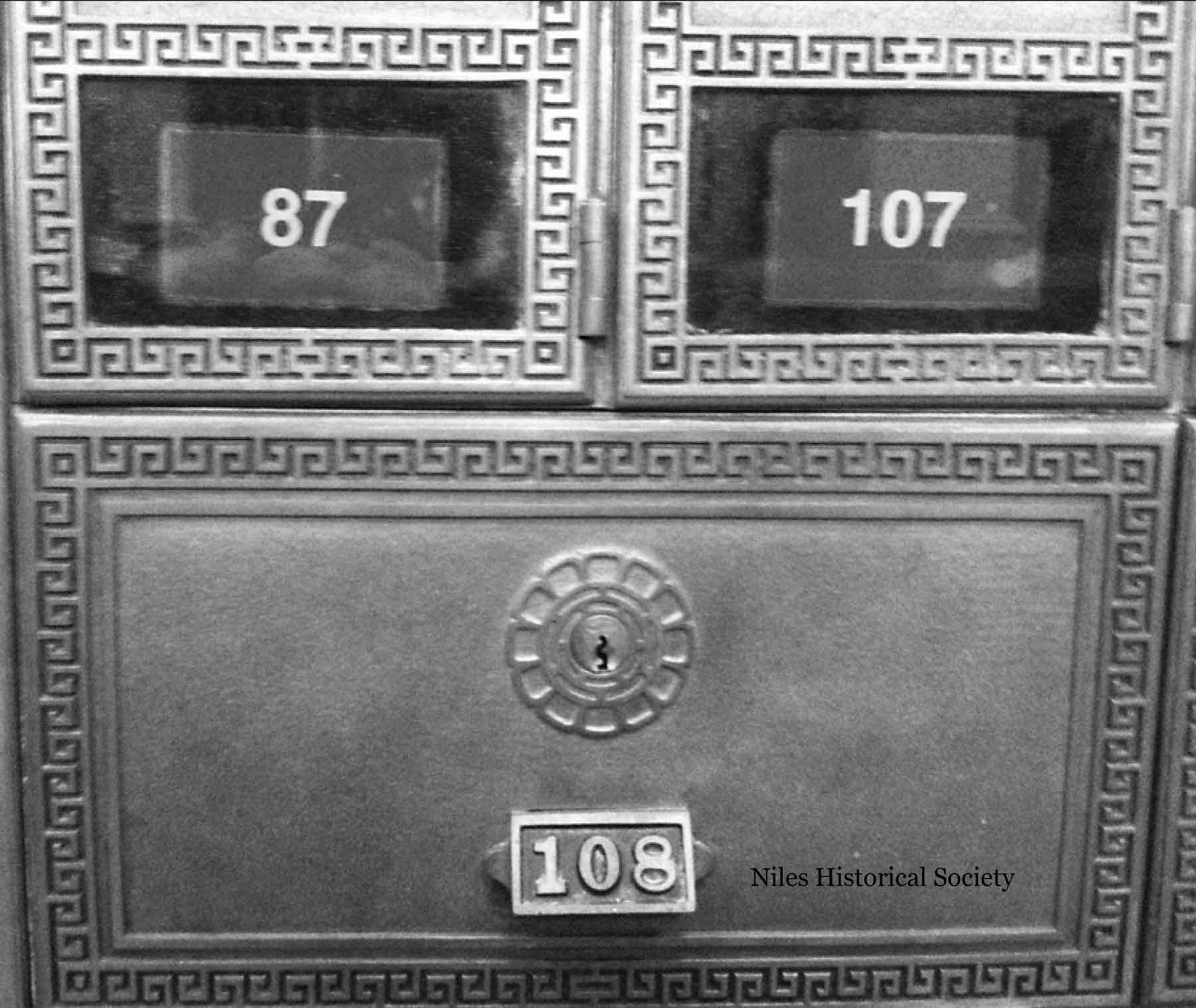
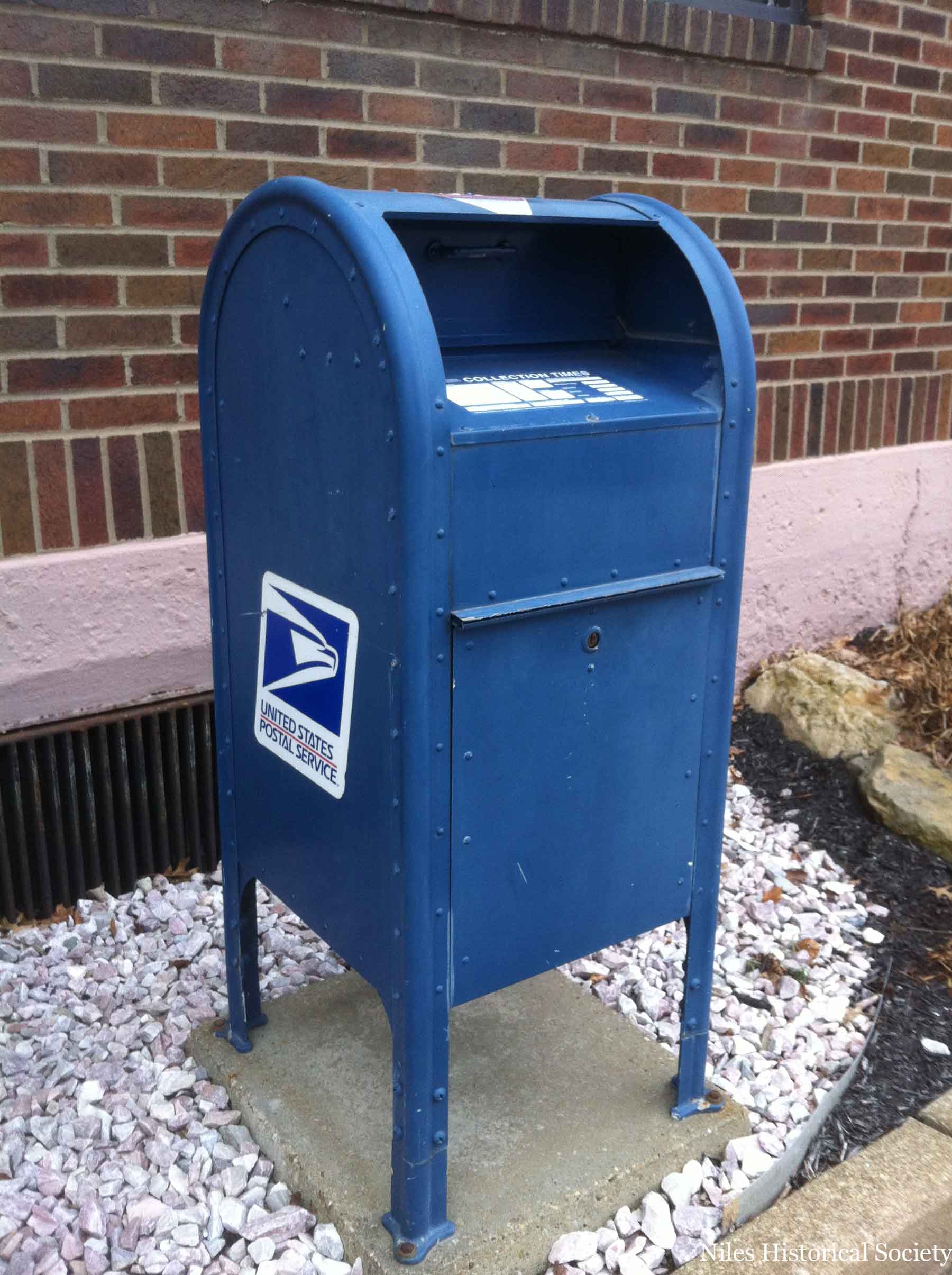
(C)The new post office had official PO Boxes of various dimensions that could be rented. (R) An example of the mail drop boxes that were located throughout each neighborhood. Mail carriers would unlock the collection box and take the mail to the post office for sorting. Earlier drop boxes were painted a drab olive green color. |
 |
| |
||
View of Niles Post Office |
View of Niles Post Office |
Future site of Niles Post Office |
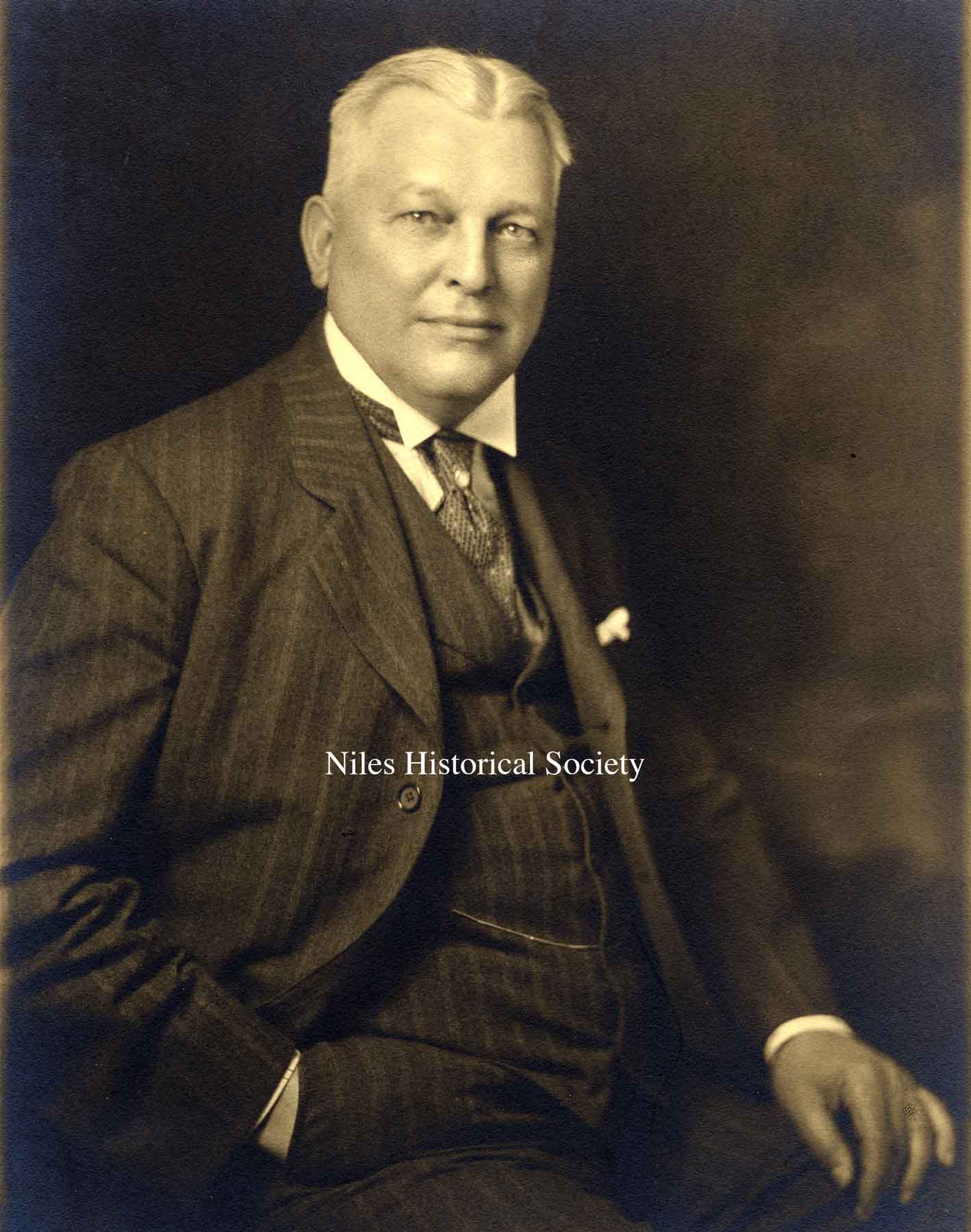
J.D. Waddell: chairman of the Post Office Committee of the Niles Board of Trade responsible for getting the new building. |
W. Aubrey Thomas: former congressman in 1913 who persuaded the U.S. Government to buy the lot upon which the new post office is being built. |
John Cooper: present congressman from the 19th District who was instrumental in getting the post office for the city. |
The interior of the building is very spacious and efficiently arranged. The rear platform is 29 feet wide with a 27-foot entrance way. From the ground floor to the roof is 32 feet, 9-1/2 inches. In the basement are the following quarters: Internal Revenue Office, Civil Service, post office inspector’s room, carrier’s toilet, ladies’ toilet, men’s toilet, file room, boiler room, showers, and three storage rooms. The swing room where the carriers eat their lunches during the noon hour is also in the basement. On the first floor are the following
rooms: work room, 85 feet 8 inches long and 47 feet 9 inches deep;
the postmaster’s office, 24 feet 4 inches by 17 feet 11-1/2
inches; public lobby 48 feet by 16 feet; money order and registry
office, mailboxes, general delivery offices, postal savings, a
burglar proof vault, postmaster’s lavatory, vestibule, janitor’s
closet, and space for a post office civil service bulletin. |
In 1927, Andrew Mellon, secretary of the treasury placed Niles on the authorized construction list, and it took five years for the construction to get under way. Niles was allotted $130,000 for the building. At first the amount was placed at $85,000 but with the aid of John G. Cooper, congressman from this district, an additional $45,000 was secured for the construction. D.J. Thomas is now serving his third four-year term as local postmaster. His last appointment was received in April 1932. He succeeded A.L. Richar. Prior to his appointment by Calvin Coolidge in 1924, Mr. Thomas was a roller in the Republic mill.
|
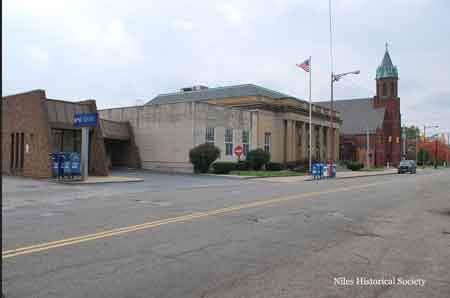
In 1966 an addition was added to the original post office.
PNC Bank built a drive-thru where the old police and firestation had been until it was demolished in 1976 during urban renewal. |
|
|
||